There was a time when fighters showed up and faded from view until the next bout. That version of reality feels distant. Today’s MMA athletes and wrestling performers exist in a space where a single punch can circle the globe in seconds, and a personality can outweigh a title belt.
Look closer, and a pattern emerges. These athletes are building identities that stretch far beyond competition. Athlete and entrepreneur. The fight itself starts to feel like just one piece of a wider picture.
The rise of the fighter entrepreneur
Fighters have learned to turn attention into something concrete. Nielsen Sports reports show that leading combat athletes gain millions of followers each year, often rivaling players from major team sports.
Attention on its own does not mean much. What matters is how it is used. Some fighters launch clothing brands. Others invest in startups or open gyms that double as social spaces. A few move into completely different industries. Wrestling had an early advantage here. Performers were already building characters that sold tickets and merchandise. That instinct carried smoothly into social platforms.
Persona as currency
Skill wins fights. Personality fills arenas. SportsPro Media has reported that athletes with strong personal narratives attract far higher engagement than those focused only on performance. Fans follow stories. Comebacks, rivalries, unexpected turns. This is where training takes on a second role. It becomes part of the story. Early mornings, injuries, repetition. These details create a connection.
Authenticity is often mentioned, yet rarely is it simple. Some fighters are loud and unfiltered. Others present a more controlled image. Both can work. The key is consistency. The persona needs to feel believable, even if parts are shaped for the audience. Fans notice when something feels off.
Digital platforms are the real arena
The main arena might now be a screen. Instagram, YouTube, TikTok. These platforms have reshaped visibility. A few realities stand out:
Sponsored posts can match or exceed fight earnings
YouTube channels bring steady, long-term income
Short videos have pushed global recognition at a surprising speed. And again, training content sits at the center. Fans are drawn to the process. The repetition, the grind, the visible effort. Another shift is happening quietly. Fighters are no longer fully dependent on promoters. Subscription platforms and exclusive content allow direct income. This brings more control, but it comes with pressure. Managing an audience takes time and consistency.
Crossover power into mainstream culture
Some transitions feel natural. Wrestling stars often move into film, helped by their charisma and experience performing in front of crowds. MMA fighters often focus on business. Fitness platforms, nutrition brands, digital products. Their expertise in training becomes something that can be scaled.
Here is where it gets interesting. Success outside the sport feeds back into it. A strong brand increases visibility. Visibility boosts promotion. The cycle repeats. As explained here, even platforms built around online casinos like Slots.lv show how audience engagement, monetization, and digital visibility now operate across entirely different entertainment sectors.
The risks behind the spotlight
Constant visibility has a cost. Not every athlete manages to balance performance and promotion. The demand to stay relevant never really pauses. Audiences move fast. Attention fades. Staying visible requires steady effort, and that can wear people down.
There is a quieter issue. When everything becomes content, the line between person and persona begins to blur. At that point, maintaining authenticity becomes harder. The audience expects consistency, yet real life rarely fits that pattern.
Conclusion
The shift from fighter to brand reflects a bigger change in sport. Athletes are no longer defined only by wins and losses. Their influence comes from how they connect and expand beyond competition. Some will focus only on fighting. Others will build something that lasts well beyond their careers. And that might be the real shift. Victory is no longer decided only inside the ring. It extends into everything that surrounds it.
Professional wrestling has two major players again, and that’s genuinely good for fans. WWE and AEW are pushing each other in ways that neither would admit publicly. But sitting back and looking at the numbers in 2026, the gap between them is becoming harder to ignore.
The Scoreboard: Viewers, Streams, and Cold Hard Math
WWE moved Raw to Netflix at the start of 2025, and the bet has paid off. The April 6, 2026 episode of Raw generated 2.9 million global views and 5.5 million hours watched, finishing sixth on Netflix’s global top ten for the week. That’s not just a wrestling number. That’s competing against everything Netflix produces, globally, every single week. For context: year over year, the April 7, 2025 episode drew 2.8 million global views, meaning Raw grew modestly to 2.9 million in 2026 — consistency being the real story, not explosion.
For fans who want to watch wrestling anywhere, anytime, WWE’s global footprint keeps expanding. Apps like 1xbet apk download reflect the broader shift in how modern audiences consume live entertainment on mobile — and WWE’s Netflix distribution taps directly into that on-the-go habit.
AEW’s numbers tell a different story. AEW Dynamite is averaging a 0.114 demo rating and 637,000 viewers in 2026 compared to a 0.169 and 616,000 for the same period in 2025. Viewership is actually slightly up, but the demo rating — the metric advertisers care about most — has dropped significantly. That’s the kind of number that makes network executives nervous at contract renewal time.
A few standout data points from the ratings picture:
WWE SmackDown on USA Network averaged around 990,000 viewers in early January 2026, still routinely finishing as cable’s second most-watched show on Friday nights.
WWE NXT on The CW averaged 618,000 viewers in January 2026 — which means WWE’s third brand alone nearly matches AEW’s flagship.
AEW Collision on TNT averaged just 271,000 viewers in January 2026, down 20% from the same month in 2025.
The Roster Problem AEW Keeps Creating for Itself
Here’s the thing about AEW: the in-ring quality is genuinely excellent. The matches deliver. The problem is that there are too many of them, featuring too many people nobody has time to care about.
In January 2026 alone, AEW signed over 14 new names to the roster, including The Rascalz, Tommaso Ciampa, and several CMLL stars. That sounds impressive until you realize the promotion has only four hours of television per week. Established stars including Britt Baker, Keith Lee, Jay Lethal, and others were already struggling for regular TV time before the new wave of signings arrived.
Wrestling analyst Dave Meltzer has suggested one reason Khan keeps signing talent: in some cases, AEW acquires new signings partly to prevent them from landing in WWE, which is a defensive strategy dressed up as an offensive one. Meanwhile, some of those signings are genuinely exciting.
Tony Khan himself pointed to a few standout additions:
Women’s champion Thekla, who Khan called the “MVP” of AEW’s new arrivals, has delivered high-profile matches and won the world title after arriving in 2025.
Kevin Knight and “Speedball” Mike Bailey, known as Jet Speed, earned praise from Khan as “fantastic signings” who had an incredible run in their first year.
Tommaso Ciampa, a respected veteran, won the TNT Championship quickly after arriving in 2026.
Good signings exist. The challenge is that every good signing also buries three people already on the roster.
What WWE Gets Right That AEW Still Struggles With
WWE operates like a machine: stories build toward WrestleMania, every angle has a destination, and the presentation is polished enough to survive Netflix autoplay. Raw has drawn 2.8 million global views or higher every week since mid-February 2026, a consistency that reflects a stable and loyal global audience.
AEW’s best episodes spike nicely. The March 25 Dynamite headlined by Kenny Omega vs. Swerve drew 765,000 viewers, a strong number for the show. But those highs require star power. Without a top name in the main event, the floor drops fast.
The comparison ultimately comes down to three things that WWE currently executes better:
Television distribution: Netflix gives Raw a global platform with built-in recommendation algorithms. AEW’s TBS home doesn’t offer the same discovery engine.
Story clarity: WWE builds months-long arcs to marquee events. AEW’s booking can feel reactive and crowded.
Brand discipline: WWE has Raw, SmackDown, and NXT as distinct shows with different identities. AEW Collision is still searching for its own reason to exist.
None of this means AEW is failing. It means AEW is a strong number two in a world where being number two still pays the bills and produces excellent wrestling every week. The Monday Night Wars of the late 1990s ended with one company buying the other. This version seems set to end with two companies finding their permanent lanes — which, honestly, is the better outcome for everyone watching.
The future of women’s wrestling is in good hands. For most veterans of professional wrestling, it is easy to coast, collect a paycheck, soak in the fame, and live off past accomplishments while watching the new generation make its way. Not with WWE superstar Bayley. Bayley’s impact on women’s wrestling is best understood not just through championships or moments, but through evolution. From her early days in NXT to her current role as a mentor shaping the next generation, her career mirrors the growth of women’s wrestling itself.
From NXT standout to cornerstone of a revolution
Bayley emerged in NXT as a unique presence. At a time when women’s wrestling in WWE was still fighting for consistent respect, her underdog persona and emotional storytelling connected deeply with audiences. Alongside Sasha Banks, Charlotte Flair and Becky Lynch she became part of the “Four Horsewomen,” a group widely credited with changing perceptions of what women’s wrestling could be.
Their matches in NXT were not treated as sideshows but as main events. Bayley herself acknowledged during that era that the group was revolutionizing women’s wrestling. Rivalries, particularly her series with Banks, helped establish a standard built on athleticism, storytelling, and emotional investment.
Championship success and sustained excellence
Bayley’s transition to WWE’s main roster solidified her place among the most accomplished performers of her generation. A multiple-time women’s world champion, she became the first Grand Slam Champion in WWE women’s history and consistently delivered across different roles, from fan-favorite babyface “Hugger” to the calculating “Role Model.”
Her success, however, has often been less about spotlight dominance and more about reliability. Bayley has been central to elevating others, contributing to a deeper and more competitive division. That consistency has made her a respected locker room leader, someone trusted to guide newer talent while maintaining high in-ring standards.
Leadership beyond the spotlight
In recent years, Bayley’s influence has expanded beyond television. Her Lodestone Women’s Wrestling seminar represents perhaps her most direct investment in the future of the industry. It is helping mold the future for women’s wrestling as we know it.
Launched in late 2025, Lodestone is a free seminar designed for experienced women wrestlers, with Bayley covering expenses to remove financial barriers. Some performers have all the talent in the world, but like most in this economy, financial hardships are holding them back. Bayley is eliminating that road block. The camp blends in-ring training with mentorship, leadership development, and real-world insight. It has featured appearances from top names like John Cena, Bianca Belair, and Rhea Ripley giving attendees access to a wide range of perspectives. These attendees are able to pick the brains of some of the greatest performers of all time.
Participants are selected from applicants and brought together for intensive sessions that include workouts, discussions, and hands-on coaching. More than just a training camp, Lodestone functions as a bridge between generations, reinforcing the collaborative culture that helped define the Four Horsewomen era.
Bayley has described the project as a passion initiative, one rooted in her desire to give back and ensure women’s wrestling continues to grow beyond the foundation her generation built.
Building the future while honoring the past
What separates Bayley from many of her peers is how seamlessly she has transitioned from revolutionary figure to architect of the future. While still active at a high level, she has embraced a dual role, competing while actively preparing others to succeed.
Her career reflects the broader arc of women’s wrestling in WWE. From fighting for time in NXT to headlining major events and now mentoring the next wave, Bayley has been present at every key stage of that transformation.
In many ways, her legacy is still being written. Not just in title reigns or accolades, but in the wrestlers who will emerge from Lodestone and carry forward the standard she helped create, ensuring the division’s momentum never slows.
There is a difference between heat and rejection. Right now, what Pat McAfee is getting ahead of WrestleMania does not feel like the kind WWE is hoping for.
McAfee is charismatic, recognizable and has proven he can deliver in big moments. But this is not just another segment or celebrity cameo. It is not even a vehicle to push a product. This is the main event scene of WrestleMania, and fans are pushing back, not quietly either. To them, this is not adding to the story. It is replacing it.
The story fans were invested in
For months, the emotional core of this build has centered on Cody Rhodes and Randy Orton. Twenty years of history does not require much setup. At its best, the feud felt layered, personal and rooted in that history. It felt like a WrestleMania main event should feel: earned.
That is why the frustration is so loud.
McAfee’s insertion does not feel like a twist that enhances the narrative. It feels like a pivot that interrupts it. Instead of deepening the conflict between Rhodes and Orton, the focus shifts outward to a personality who was not part of the journey fans were following. Once that shift happens, it is hard to ignore.
When the reveal is not worth the build
Mystery angles live and die by their payoff. They can elevate a story or derail it. Wrestling fans will buy in, speculate and debate for weeks if the reveal delivers.
This one did not.
The reaction was not explosive or satisfying. It was confusion, followed by disappointment. Not because McAfee is incapable, but because the role he stepped into felt larger than what fans believed he should occupy. Expectations matter, and WWE set them high.
The “main character” problem
There is an unspoken rule in wrestling: the biggest matches should belong to the wrestlers who carried the story.
Rhodes and Orton.
Right now, it does not feel that way. Instead of standing at the center, they are part of a story that increasingly revolves around McAfee’s motives, promos and presence. The gravity of the main event has shifted, and not in a way that elevates the people it is supposed to.
For a fan base that has spent years asking for long-term storytelling and payoff, that is a tough pill to swallow.
It feels too corporate, not organic
Modern fans are more aware than ever. They understand media deals, cross-promotion and branding. That awareness is working against this angle.
McAfee is more than a commentator who wrestles occasionally. He is a major media figure with ties outside WWE. When he becomes central to the biggest storyline of the year, it does not feel accidental. It feels strategic, and not in a storytelling sense.
That perception breaks immersion. Instead of asking what happens next, fans start asking why this is happening at all.
The promo that made it worse
If there was a chance to win fans over, it likely depended on McAfee’s delivery.
Instead, going off script, his tone criticizing the product, calling out the fan base and positioning himself above the current landscape had the opposite effect. The following week, WWE then proceeded to double down, and produce another promo where Pat’s “huge announcement” was that WrestleMania 42 tickets would be 25% off for that weekend. It’s also very hypocritical writing. Nothing says “we don’t care about your feelings” like a pathetic begging of “please buy our tickets, here’s a coupon!”
Wrestling fans will embrace a villain, but there is a line between playing a heel and sounding dismissive of the audience. Right now, that line feels blurred.
WrestleMania is not the place for this experiment
This might work elsewhere. A SummerSlam angle, a Royal Rumble twist or a long-term story could have potential.
But WrestleMania is different.
It is where stories are meant to pay off, not pivot. It is the culmination, where full-time stars carry the weight of the biggest matches and the audience expects resolution.
That is why this feels off.
It is not about McAfee, it is about timing
This is not a rejection of McAfee as a performer. I have been a fan of his since his outlandish days as a punter for the Indianapolis Colts. I have followed his media path since his podcast was out of the back of a box truck. With Pat, he has proven he belongs in WWE in some capacity. He is entertaining, committed and understands the business. We get that.
But this moment feels misplaced.
Fans do not want to see this spot given to someone who was not part of the climb, especially when the people who were are still there.
The bottom line
Fans are rejecting this because it feels like a detour at the worst possible time.
They wanted Rhodes vs. Orton to stand on its own. They wanted the story they invested in to reach a natural conclusion. They wanted WrestleMania’s main event to feel like the culmination of everything that came before it.
Instead, they got something else.
In wrestling, sometimes that says more than any reaction ever could.
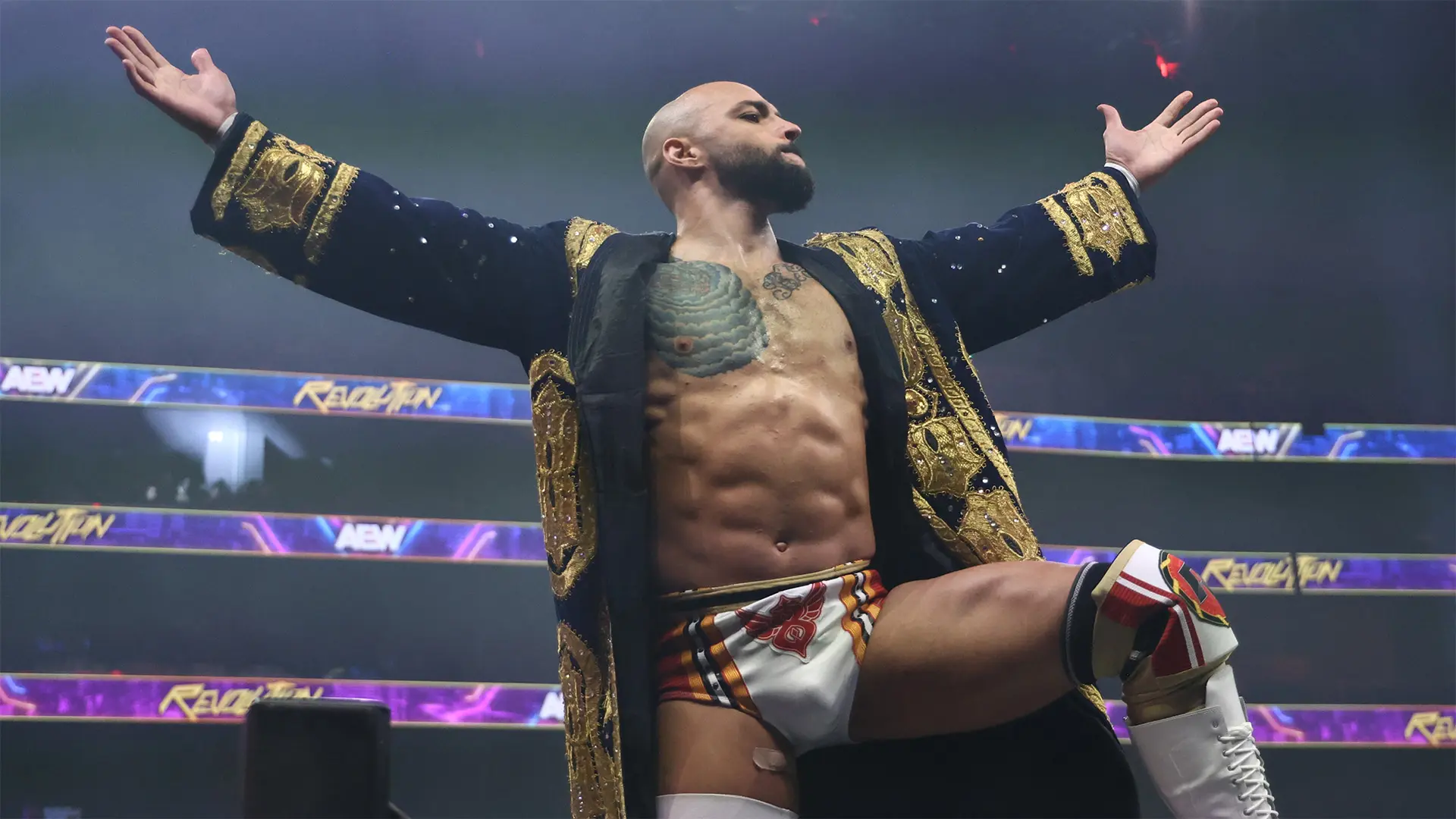
Ricochet’s run in All Elite Wrestling feels fresh, sharp and impossible to overlook. Once known mainly for his highlight-reel ability, he has grown into one of the most complete performers in the business today. His earlier stops in NJPW and WWE showcased his athleticism, but his debut at AEW All In Wembley in 2024 marked a true shift in direction.
Since that moment, Ricochet has reshaped how he is viewed. The in-ring brilliance has always been there, but now it is paired with confidence, presence and purpose. He no longer feels like a performer trying to stand out. He feels like one that can lead the show.
AEW Fight for the Fallen.
His rivalry with Swerve Strickland played a major role in that transformation. That specific program pushed him to another level, bringing out the Ricochet many believed had always been there. On the January 1, 2025, episode of Fight for the Fallen, Ricochet viciously attacked and bloodied Strickland with a pair of scissors, cementing his heel turn. To make matters worse, on the February 5 episode of Dynamite, Ricochet defeated Strickland and proceeded to steal the Embassy robe bestowed upon Strickland by Prince Nana in honor ofEmbassy member Jimmy Rave. Feuds of this caliber also gave him the opportunity to talk on the mic.
For years, Ricochet carried the stigma that he could not cut a promo. Whether it wasbrought up in feuds, or from the basement dwellers on the internet, that label was always attached. That label now feels misplaced—gone.In AEW, he has found a voice that connects. His delivery is sharper, more confident and far more natural. As a heel, the reaction from the crowd is all it takes to know you got it. It is hard to ignore the contrast with his time in WWE, where his character often felt restricted and carefully managed—like there was a leash on at all times.
That difference is clear today. In AEW, Ricochet has the freedom to define himself. He is no longer boxed into one dimension. It’s no longer “go out there and do some flips!” He is evolving in real time, and the results speak for themselves.
That evolution has led to his emergence as one of the top heels in professional wrestling. Ricochet has embraced the role, adding layers to his character while maintaining the dynamic style that made him special in the first place. The reaction from crowds reflects that shift. He is not just respected, ( the internet will tell you otherwise ) he is a focal point. Whether it’s hundreds of rolls of toilet paper being thrown into the ring, chants of “BALD!”, or the deafening “shut the f*ck up!”, it is obvious that what Ricochet is doing is working.
Along side his character work, Ricochet’s rise reached another level when he became the inaugural AEW National Champion. The moment served as both recognition and validation. It confirmed that Ricochet is not just thriving, he is essential—proof that he is thought highly of to Tony Khan, and his peers.
Most importantly, this run feels like a revival. The move to AEW has not only elevated his career, but it seems to have restored his passion. There is a clear energy in everything he does, a sense that he is fully invested in his craft again.
Ricochet is no longer defined by what he was. In AEW, he has become what many believed he could be all along.
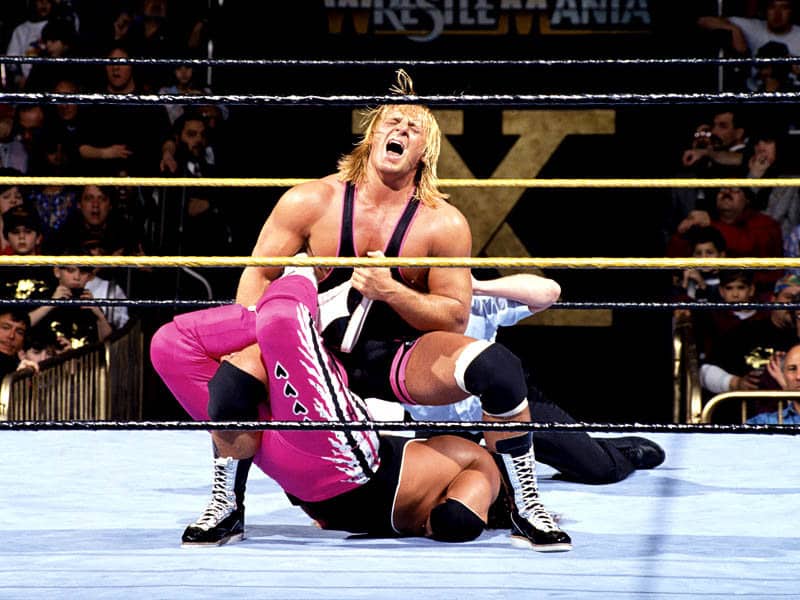
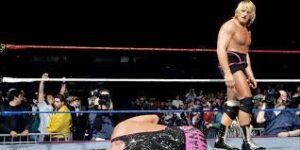
Have you ever heard the story of “Right Hand, Left Hand”? The eternal story of good and evil? Keep reading, and I’ll tell you. On each knuckle, a word is tattooed. H-A-T-E, and it was with this left hand that Cain dropped his brother Abel down for the 3-count. L-O-V-E, the right hand, the hand of love. This is the story of life, wrestling fans. Each finger, intertwined in a war within the squared circle. Old Left Hand, it swings, hitting Right Hand against the turnbuckle as it slides and slumps in the corner. Lefty could pull him in for the pinfall here, folks. But no, just a minute; Right is back on its feet, love’s fighting back. It hits, and it hits, and it hits. Right Hand delivers its hook, and Left is down for the count. Yessirree folks, Right Hand has won, love wins in the end. This is the story of Bret Hart versus Owen Hart at WrestleMania X.
The saga of Bret and Owen Hart is a storied one. Parts of a dynasty, performers forged in father Stu Hart’s infamous Hart Dungeon. The place where such tortures would only let screams escape. Canada’s Hart family prided itself on the wrestling business. While not all of its lineage made it to great heights, if any, none quite reached the levels of the dark-haired Bret and the blonde Owen.
Bret had been with the company since 1984. He’d enjoyed many largely applauded rivalries, like Mr. Perfect, Razor Ramon, and Ric Flair. In the latter years of his career, his feuds with Shawn Michaels and “Stone Cold” Steve Austin further ensured his place in history that future generations of wrestling fans can revisit.
Owen briefly stayed from 1988 to 1989 before taking trips to Stu’s Stampede Wrestling while performing in New Japan Pro Wrestling and World Championship Wrestling, sometimes under a blue mask. As of 1991, he’d been in Bret’s corner until the 1993 Survivor Series, wherein he’d begin clashing with his brother.
Emerald with envy, he had mounting frustrations. To Owen, Bret was a glory hog. Always in the spotlight, almost effortlessly so. The crowd took to Bret, the cameras took to Bret, and only the shadows welcomed Owen. The sort of malicious kind, but it gave Owen a truth erudite to him.
And there’s a beauty to truth, even the most dreadful of it.
When a wrestler catches audiences’ true mindsets, when their grave heads that fans aren’t always behind them, aren’t really supporting them, their world falls into panic desolation. The cheers have fallen, and all motivation is gone. These cheers do not fall a little—they careen to the floor and shatter into tiny fragments, never to be built up again; shards always reveal the cracks. And the wrestler’s world is never quite whole again. It’s an aching sort of evolving.
This, too, followed his vision of Bret. All the flaws inherent in his brother. Oh, he’s propped up while Owen had to work, work, work, and for little fanfare. Those purple sunglasses, the glistening hair, the black and white gear made up for it. Bret was a superhero, and Owen was the errand boy. Seeing Bret struggle to tag him in at the 1994 Royal Rumble, well, what do they say about final straws?
Owen brutalized his brother in front of the whole world and their judgment. But was he truly his brother’s keeper? The voices denounced him, and he would walk the rest of his years as a heel. That was fine, because he had no pressure to be perfect. All he needed was to be good.
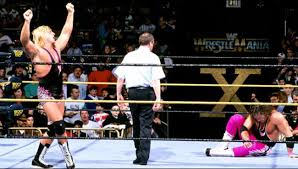
Come time for the opener, Bret Hart versus Owen Hart at WrestleMania X, bitter Owen and mournful Bret came to a head. Confident and rageful, Owen steeled his blue eyes at his brother. Ready. Believing himself capable of surpassing the golden child.
Madison Square Garden dings with a bell to signal the start of this family dispute. They grappled to the floor, the stoic Bret coolly transitioned Owen’s Fireman Carry to a leg hold. Owen raced to the ropes to break his brother’s grasp around his waist. Focus dwindled.
Briefly, he steeled himself to gain control of Bret’s hips, yet the technician maneuvered it to hurl him outside. Chopping Bret down with a drop toehold, Owen engaged a headlock. Swinging each other’s arms around, Owen yanked Bret’s flowing mane to drop him on the white canvas. Bret eludes a whip to the corner. Clutching at Bret’s hair again and again, Owen snarls at how unflinching he is, how the crowd calls his name.
Flung outside, Owen teased an escape to the back, only for Bret to reintroduce him to the New York fans. Bret subverted a clothesline, dropping Owen with a falling crucifix pin. There’s a certain caution to his movements, restrained, just so.
Striking a kicking blow that laid brother low, Owen taunted him, posturing him with the same pose fans clamored for.
Maintaining his dominance, Owen crushed Bret with a backbreaker. He wrenched his spine back, clutching Bret’s chin. Following an escape outside, Owen reunited with Bret within the ropes, his advances blocked by Bret and a surprise roll-up pin. Perched on the top rope, Owen soared as the wind blew his blonde locks back; Bret rolled out of his path.
A retaliatory clothesline from Bret gave him hope, but only just. Another backbreaker, followed by an elbow drop. A miscommunication with Referee Earl Hebner permeated irritation with the Hitman. Over the top rope, Bret rocked Owen while tenderizing his own knee in the process.
Smelling blood in the water, Owen stomps on the very leg Bret limped on, tweaking the left leg and unleashing a falling elbow on it. Tethering his brother to the ring post, he tormented the knee, slamming it. Again and again and again. Clipping the wings of everyone’s favorite angel. Locking in a figure-four leglock, Owen arrogantly yet cathartically raised his arms in preemptive celebration.
Bret finally ruins Owen’s momentum with an enzuigiri. All caution has been cast aside. Flattened his brother with a bulldog and a piledriver. Superplexing Owen from the top turnbuckle, Bret lay in agony alongside the brother he shared laughs and sobs and screams with, all those memories as pink and black as a fading memory and deepening pain.
Bret had Owen on the ropes, draining the life with a sleeper hold; a low blow, a mule kick breaks it. Gritting his teeth, Owen stole Bret’s Sharpshooter, sinking as low as he could. As though lost in the quiet of space, Bret’s screams of sweet, dear agony go unheard, but reversed his misfortunes with his patented, true Sharpshooter.
Carrying Bret atop his shoulders, Owen nearly succumbed to a Victory Roll pin attempt, but rolled it over in a snap. One, two, three. Bret’s shoulders on the mat, staring up at the lights.
Exhausted, Owen jubilantly tumbled away, Bret awash in disbelief amid the booming drums of his brother’s theme song. Spit whitened at the edges of Owen’s lips, counting those victorious mat-striking trilogy.
His brother slain before the eyes of New York and cameras broadcasting worldwide, Owen sowed jealousy and reaped vindication. Nothing is left tying him to the Excellence of Execution. The Blackheart, the King of Hearts, now reigns in the solace he’s overcome the prodigal, fortunate one.
This match did not end the night, however. Bret would face the enormous Yokozuna for the WWF Championship in a winning effort. The brothers only opened the show for audiences at home. Yet, it cemented one thing: Owen could stand on his own to succeed. No longer did he have to hold anyone above his shoulders, but he was above theirs.
Poetically enough, Bret ended his night as just that, hoisted on the shoulders of the locker room. He had to let go of Owen, an inhale and exhale because tonight, he didn’t have to be perfect, so he could finally just be good. He didn’t take pride in his hurt; it didn’t make him seem large and tragic. Either way, he’d play on a grand stage with not just himself as the audience.
Hate may have won tonight, but love always wins; a few years later, Bret appealed to Owen against Americans he grew to despise.
Bret Hart and Owen Hart’s WrestleMania X epic is one of my earliest memories of pro wrestling. It’s listed in WWE’s lists of great WrestleMania matches, and it has stamped its place in wrestling history simply by being a great match that told a compelling story with a captivating build. Fans will mirror this sentiment in videos, lists, and casual conversations.
Each time I revisit this bout, I always sense an intensity that feels a little too real to be the silly wrestling we all know. I walk away with the notion that Bret and Owen’s rivalry had elements of reality to it, that it was built on actual conversations and annoyances with love still always at the center of things.
Stories like Bret Hart versus Owen Hart at WrestleMania X, an acclaimed brotherly feud, give us fans the moments with which to remember. Whether it references pop culture, relates to our sensibilities, or echoes biblical epics, pro wrestling resonates with that human element as our heroes and villains tangibly age beside us.
There is no shortage of great WrestleMania matches. Every fan has their own list, their own nostalgia and their own bias. This one leans into all of that. These are not just the “best” matches on paper, or based via Cagematch ratings. These are the ones that felt different, the ones that stuck, the ones that defined what WrestleMania is supposed to be. The ones that will be remembered forever.
10.WrestleMania 18
Hollywood Hogan vs. The Rock
This is not here for technical reasons. It is here because of the crowd. The all time meet up between two bigger than life names. Toronto completely hijacked the match and turned it into something bigger than either man. You can argue about match quality all day, but you cannot fake that kind of electricity.
9. WrestleMania 10
Bret Hart vs. Owen Hart
This is for the purists. No spectacle needed, just two brothers putting on a near perfect wrestling match. It still holds up. It’s arguably the best opening WrestleMania match ever. It is the complete opposite of Jey Uso vs. Jimmy Uso at WrestleMania 40.
8. WrestleMania 31
Brock Lesnar vs. Roman Reigns
This match was good before it became great. Then Seth Rollins showed up and flipped the entire story by successfully cashing in his Money in the Bank briefcase. That moment alone pushes it onto this list.
7. WrestleMania 19
The Rock vs. Stone Cold Steve Austin
This is lower than some would expect, but that says more about the list than the match. It is a perfect ending to a rivalry that defined an entire era.
6. WrestleMania 20
Chris Benoit vs. Triple H vs. Shawn Michaels
This one is complicated now, and it should be. But purely as a match, it delivered at a level that few triple threats ever reach. It felt like a payoff in every sense. Unfortunately, tragedy will forever overshadow this match, but it still makes my list.
5. WrestleMania 13
Stone Cold Steve Austin vs. Bret Hart
If you are into storytelling, this is probably your No. 1. The double turn is flawless. Austin passing out instead of tapping is still one of the toughest visuals WWE has ever produced. When you read who it was, I guarantee you immediately pictured Steve Austin wearing a crimson mask, screaming in pain.
4. WrestleMania 30
Daniel Bryan vs. Batista vs. Randy Orton
This is where fan voice actually won. You could feel it in the building. Bryan was not supposed to be the guy, and then he absolutely was. That matters more than move sets or match structure. With this match, Bryan forever cemented his legacy as a true underdog turned champion.
3. WrestleMania 40
Cody Rhodes vs. Roman Reigns
This was the moment WWE spent years building. The emotion, the callbacks, the sense that history was finally being rewritten, it all landed. To some it was over booked, but you can’t ignore that crowd reaction. This felt like a true ending, something WrestleMania does not always deliver anymore. Cody finally finished his story.
2. WrestleMania 25
The Undertaker vs. Shawn Michaels
If you think something else belongs here, you are probably overthinking it. Well, maybe one match. This is the match people point to when they try to explain why wrestling works. The pacing, the storytelling, the crowd, all of it felt perfect. This could easily be #1, but I think the top match defines an entire era that helped saved professional wrestling.
1. WrestleMania X7
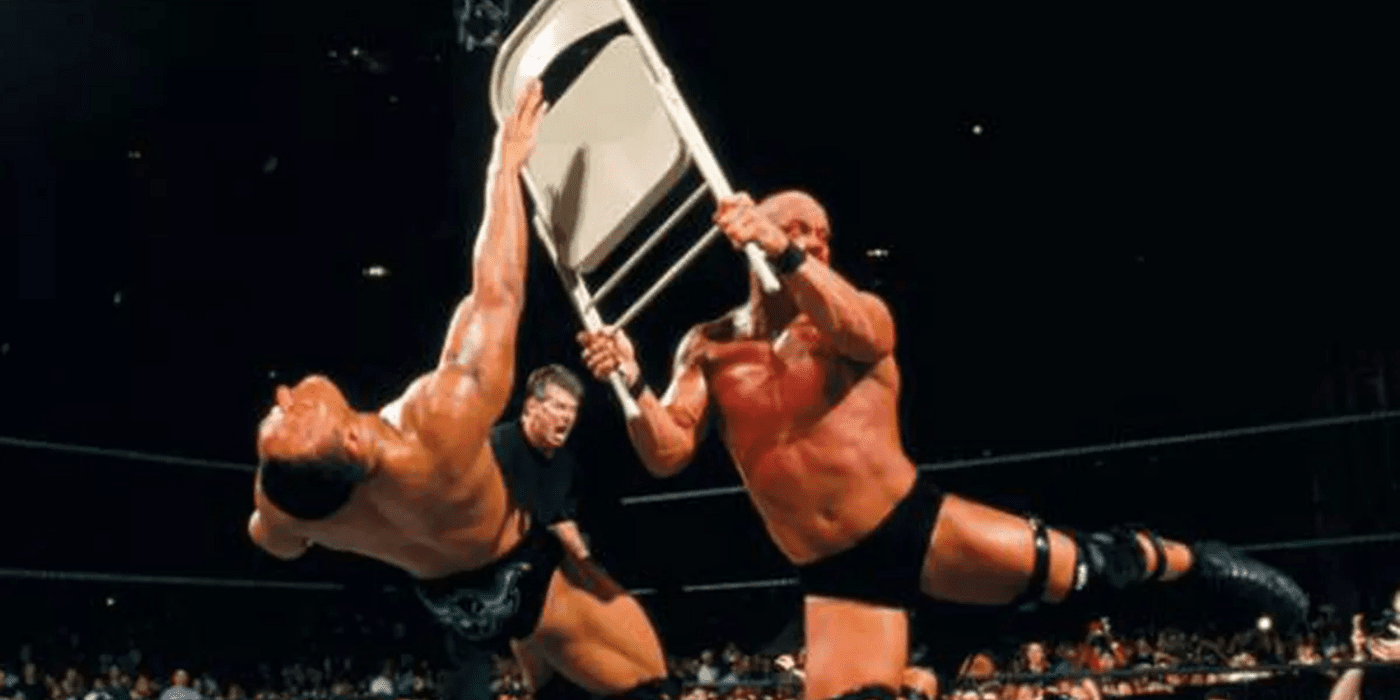
Stone Cold Steve Austin vs. The Rock
This is chaos in the best way. It is not a technical masterpiece, and it does not try to be. It is two megastars at their peak, closing the biggest WrestleMania ever. The finish is still debated, and honestly, that is part of why it belongs this high.
⸻
There are obvious omissions. There always are. That is the point of lists like this. WrestleMania is built on moments, and the best ones depend on when you started watching and what you connected with.
Cheers to a great WrestleMania 42, I hope you enjoy!
Do you ever ask yourself why MMA fights feel so much smarter and sharper now in 2026?
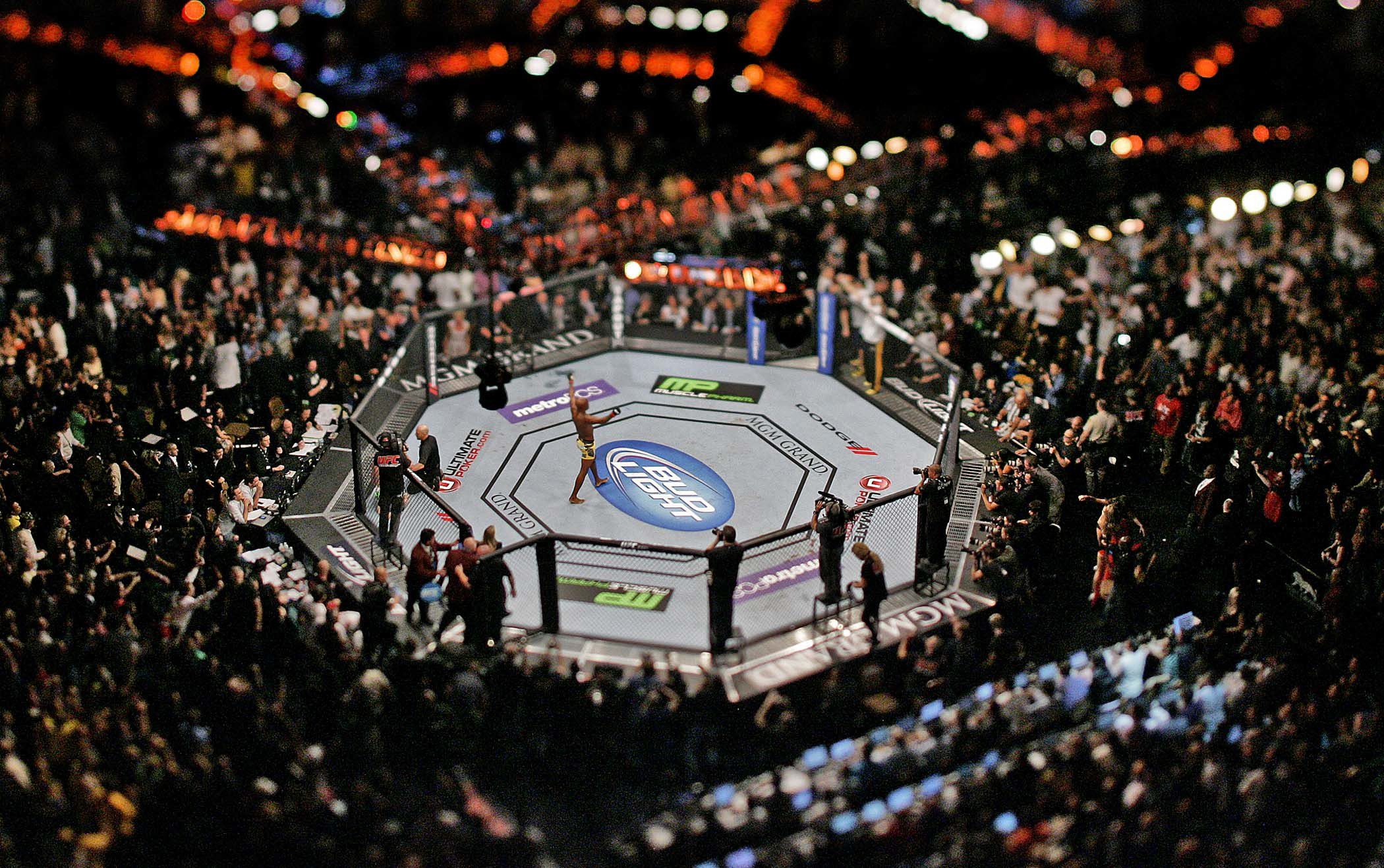
When you watch a fight today, you can clearly see that athletes are not just throwing random punches or rushing for takedowns. They are thinking more, moving better, and using a full mix of skills in a calm and clever way.
That is what makes modern MMA so exciting to watch right now. The sport is growing with fresh ideas, better training methods, and more complete fighters who know how to adjust inside the cage.
MMA has changed a lot in recent times because fighters now learn many styles together from the start. Earlier, some athletes came mainly from boxing, wrestling, or jiu-jitsu. Now, many of them train everything side by side.
This has made the sport more balanced, more technical, and more fun for fans today. Success in MMA now comes from smart timing, clean movement, control, and the ability to read the opponent well.
How Modern MMA Has Become More Complete
Today’s MMA in 2026 is all about being complete. Fighters are working hard on striking, grappling, footwork, defense, and conditioning at the same time. This has created a new kind of athlete who can stay comfortable in every part of the fight.
Fighters Now Train As Complete Athletes
A modern fighter does not depend on only one strong point. They build their skills in every area. A striker learns takedown defense and ground control. A wrestler improves boxing and kicks. A grappler becomes better at cage movement and distance control. This full approach helps athletes stay ready in every round.
What makes this change special today is the mindset behind it. Coaches and fighters now understand that balance is very important. A fighter who can mix many skills smoothly has more control over the pace of the match. This also makes the action look cleaner and smarter for fans.
Blending Styles Has Become More Natural
Another big change in recent MMA fights is how naturally styles are now mixed together. Fighters do not think in separate boxes like boxing first, wrestling second, and grappling third. Everything works together. A jab can set up a takedown. A kick can open space for a clean entry. Ground pressure can create chances for a submission or a strong finish.
This smooth connection between styles has made MMA richer in technique. It shows how much the sport has improved in today’s time. Every small move can lead to the next one, and that is why modern fights often feel more polished and planned.
How Striking In MMA Is Getting Smarter
Striking in MMA today is not only about hitting hard. Now it is also about timing, angle, rhythm, and control. Fighters are using their brains as much as their hands and legs.
Footwork And Distance Control Matter More Now
One of the biggest changes in MMA striking right now is footwork. Fighters are moving with more purpose. They are using angles to stay safe and create openings. Instead of standing in front and trading all the time, they circle, reset, and choose the right time to attack.
Distance control is also very important now. A fighter who understands range can land clean shots and stay ready for the reply. This makes the action look smooth and sharp. Fans can see how one step in or one small move back can change the whole moment of a fight.
Feints And Setups Are Used More Often
Modern fighters in 2026 use feints very well. A small shoulder move, a fake kick, or a quick hand motion can make the opponent react. Once that reaction comes, the real attack follows. This makes offense more creative and more effective.
That is why many people use an AI checker for sports writing now, but real fight analysis still needs human logic and proper understanding. In MMA, one feint is not just a fake move. It is a smart way to read the opponent and create the right opening. This kind of detail shows how much the sport has improved.
How Grappling And Wrestling Are Evolving
Grappling and wrestling are still a major part of MMA today, but now they are being used in more flexible and thoughtful ways. It is not only about taking someone down. It is also about control, patience, and choosing the best moment.
Cage Wrestling Has Become A Key Skill
Cage wrestling is now one of the most useful parts of MMA. Fighters use the fence to control position, defend takedowns, and wear down their opponents in a smart way. This part of the sport has become much more technical in recent fights.
Athletes know how to turn, frame, pummel, and stay balanced near the cage. These little actions may look simple, but they are very important. They help a fighter stay in charge and slowly build an advantage during the round.
Ground Control Is More Active And Intelligent
Groundwork in modern MMA is not slow or limited. It is active and full of purpose. Fighters are using top control to land clean shots, improve position, and create submission chances. On the bottom, athletes are staying calm, defending well, and looking for sweeps or safe exits.
This shows how much understanding has grown in today’s MMA. Fighters know that every second on the mat matters. Small changes in hand position, hip movement, or posture can make a big difference. That is why today’s grappling often feels very sharp and technical.
How Strategy Is Becoming A Bigger Part Of Every Fight
Along with better skills, strategy is now playing a bigger role in MMA in 2026. Athletes are entering fights with clear plans and making smart changes as the match moves forward.
Game Plans Are More Detailed Than Before
Coaches now study opponents closely and build game plans with care. They look at movement, timing, habits, and patterns. Then they help the fighter prepare the right answers for those moments. This makes the sport feel more thoughtful and professional today.
A good game plan can include many simple ideas, like staying in the center, attacking the lead leg, or mixing strikes after every level change. These choices may look basic, but when used well, they shape the full fight.
Mid-Fight Adjustments Show Real Skill
One of the best things about modern MMA is seeing fighters adjust during the match. If one plan is not working, they stay calm and change the approach. Maybe they slow the pace, use more kicks, or bring in more clinch work. This ability to adapt is a sign of high fight IQ.
Conclusion
MMA in 2026 feels sharper, more planned, and more complete than ever before. Fighters are not just relying on one strong skill; they are building a full set of abilities and using them in a smart way inside the cage. From clean striking and better footwork to strong grappling and smart cage control, every part of the sport is improving step by step.
All Elite Wrestling’s women’s division features a mix of emerging talent and established stars, making any “next up” discussion a crowded one. Even so, one name continues to separate from the pack. Megan Bayne looks ready for that defining moment. It’s not if she reaches the AEW Women’s World Championship, it’s when, and when she does, she has the profile to hold it for an extended stretch.
The Megasus
Bayne is currently one half of the AEW Women’s Tag Team Champions, teaming with Lena Kross as Divine Dominion. The pair captured the titles in March, giving Bayne her first championship in AEW a little more than a year after joining the roster in February 2025.
Her presence stands out immediately. Listed at 5-foot-11 and 187 pounds, Bayne carries a size and intensity that few in the division can match. She projects dominance before the bell rings, with a look and style that feel built for main-event moments. The facial expressions, the gear, the body language, she has the complete sense of presentation locked in.
Bayne’s experience also adds to her case. From dominating intergender matches to winning independent championships and creating viral moments, she has built quite the resume. She is approaching 10 years in the ring, yet has not fully broken through as a top champion on a major stage, yet. Most wrestlers at 27 are very green and inexperienced. That is not the case for Megan.
With the right direction, Bayne has the tools to anchor the division as champion. Her in-ring work continues to impress, and while her microphone skills are still developing, that gap is not uncommon and can be addressed through presentation and creative support. AEW has shown it can elevate talent into credible contenders, giving audiences a reason to invest in their rise. Many top talents in the industry have made their name in AEW, and she looks to be no different.
The broader landscape of women’s wrestling has shifted. The days of bra and panty matches are dead. There are no longer matches booked purely on sex appeal. The females are able to show their true talents, and that they have just as much skill as the men, if not even more. Matches now are longer, the competition is deeper, and expectations are higher. While booking can still improve, performers like Bayne make a strong argument for more consistent placement in headline spots. You simply cannot deny or ignore women of her caliber, making main events inevitable.
Final Thoughts
At 27, Bayne’s trajectory points upward and beyond. She is setting the standard of what the women’s division of the future will be. It is no longer a question of if she becomes a world champion, but how often she reaches that level.
This Sunday, April 12, at AEW Dynasty, AEW World Champion Maxwell Jacob Friedman, aka MJF, puts his Championship on the line against Kenny Omega. The match, billed as “The Devil” versus “The God of Pro Wrestling,” carries the feel of a potential classic.
Friedman, who turned 30 in March, represents a striking reality for All Elite Wrestling. One of its most important figures is only now entering what should be the prime of his career.
Many wrestlers have headlined major shows for the company. Some bring longer résumés. Others carry deeper legacies. But when evaluating AEW today, and where it is headed, it is increasingly difficult to argue that anyone holds more influence than MJF.
There is a growing case that he could become the most important performer in the company’s history.
MJF, The Complete Package
Building a promotion around one talent requires excellence across every major category. Charisma, character work, microphone ability, in-ring performance and star presence all matter.
Charisma, in particular, remains the foundation of any top star in professional wrestling.
MJF meets those demands.
His microphone work separates him from much of the roster. In an era where promos can feel overly scripted, Friedman delivers with a natural rhythm and control that rarely feels forced. Whether he is insulting a crowd, dissecting an opponent or advancing a storyline, his words carry weight.
He also understands how to create emotional investment. While some performers struggle to make rivalries feel meaningful even with championships involved, MJF often generates interest with a single segment.
Outside the ring, he remains just as effective. Media appearances have become increasingly important, and Friedman consistently uses them to extend his character without drifting into empty controversy. Interviews, podcasts and press scrums often become talking points when he is involved.
Inside the ring, he continues to prove his versatility. Though not defined by constant high risk offense, MJF adapts to a wide range of opponents. He has kept pace with faster wrestlers, endured physical brawls and competed against larger opponents. That flexibility allows him to succeed in nearly any style.
Taken together, he offers a rare ability to carry segments, storylines and marquee matches.
Built for the Long Run
Another key factor in Friedman’s value is time.
At 30, he is already established as one of AEW’s top performers. The possibility of sustaining that level for years makes his position even more significant.
If he remains healthy, Friedman could have decades left in the industry.
Wrestling history shows how rare that level of longevity can be. John Cena and Hulk Hogan each defined extended eras, but even their runs had clear peaks. Meanwhile, stars such as Dwayne Johnson and Steve Austin reached extraordinary heights over shorter periods.
MJF has the potential to combine both staying power and star appeal. That combination could keep him at the center of AEW for years.
There is also the constant speculation about WWE’s interest. Under Paul Levesque, it is difficult to imagine the company not pursuing Friedman if the opportunity arose.
Losing a performer of his caliber would create a significant void. While AEW’s roster remains deep, few talents match his blend of confidence, presence and ability at his age.
He may not be the only pillar, but he is often the first name associated with the company.
Rivalries that Shaped His Rise
MJF’s ascent is closely tied to the rivalries that have defined his time in AEW.
His feud with Cody Rhodes helped establish one of the promotion’s earliest major storylines. What began as an alliance evolved into a deeply personal conflict that elevated Friedman into a premier antagonist.
His feud with CM Punk blended sharp dialogue with emotionally driven storytelling. The rivalry produced several standout moments and demonstrated that MJF could match one of wrestling’s most respected talkers.
His clashes with Darby Allin showed a different dynamic. The feud positioned both men as cornerstones of AEW’s future, with MJF thriving as the calculating foil to Allin’s relentless style.
More recently, his conflict with ‘Hangman’ Adam Page concluded at Revolution, where Friedman emerged victorious from a brutal Texas Death Match. This feud concluded in ‘Hangman’ never being able to challenge for the AEW World Championship again.
Now his attention turns to Omega, a foundational figure in AEW and one of its defining performers. Kenny is arguably one of the greatest performers of all-time, and is looking to recapture gold one more time to solidify his place in AEW history.
Each rivalry has reinforced the same point. MJF consistently stands at the center of AEW’s most compelling stories.
Win or lose at Dynasty, that trend is unlikely to change.
MJF is not simply a champion passing through a moment. He is the type of performer a promotion can build around for an entire era.
If recent years are any indication, the era of Maxwell Jacob Friedman is only beginning.
Catch MJF vs. Kenny Omega tonight at AEW Dynasty, live on Pay-Per-View.