Category: Editorials

In-depth wrestling editorials, opinion pieces, and analysis from the BodySlam writing team.

  • Ranking the 3 Most Anticipated Potential UFC fights of May 2026

    Ranking the 3 Most Anticipated Potential UFC fights of May 2026

    The month of May is poised to be big for UFC fans, despite some of the matchups remaining speculative. The most important aspect of this preview is that the best fights are not necessarily the ones that are formally scheduled initially, but the ones, which are most logical in terms of rankings, matchup of styles, and divisional momentum. To fans, that is exciting. To bettors, it provides an initial guide to researching potential lines and fight dynamics.

    Tom Aspinall appears to be the superstar of the heavyweight division. In the lightweight, Islam Makhachev continues to demonstrate what it means to control and stay calm at the championship level. At 147 pounds, Shavkat Rakhmonov and Ian Machado Garry still exemplify the type of head-on clash that can define a whole title picture. These are the names that are fueling discussion regarding UFC May 2026 and they naturally generate some of the most powerful speculative fight storylines of the time.

    As readers may wish to understand the UFC predictions and betting angle, a keen Tonybet analysis will help during the comparison of sportsbook features, including live betting, cash-out, and variety of markets. Such comparison is important, as the value in a fight is often not simply the main moneyline particularly in matches with style differences. Betting odds on UFC fights should be always verified nearer to the fight week, but to have a good MMA betting guide, the idea of the probable form of a fight is always to be considered.

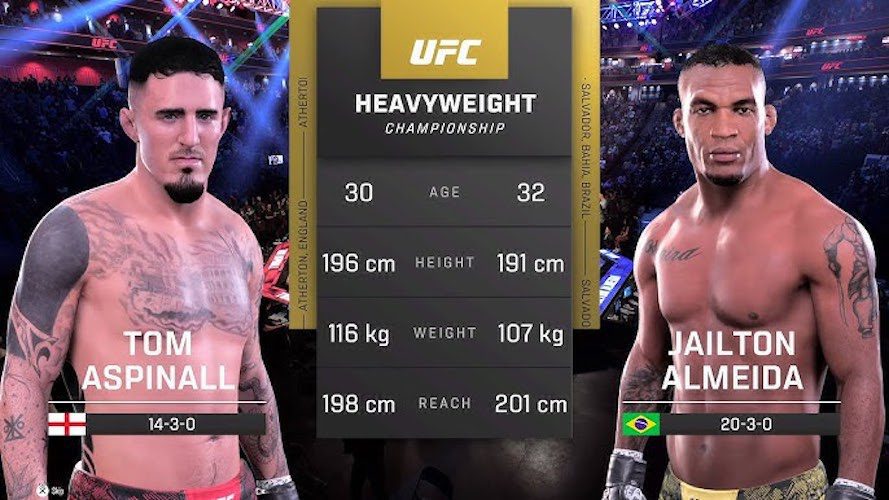
    Heavyweight title clash: Tom Aspinall vs. Jailton Almeida

    One of the strongest matches that UFC could make in the world of heavyweight would be Aspinall vs. Jailton Almeida. Aspinall is quick, hits hard, and makes swift moves. Almeida brings ruthless wrestling, strangling dominance, and the type of grappling pressure that can dramatically change the flow of a fight.

    Stylistic breakdown: Precision striking vs. relentless grappling

    The figures contribute to the understanding of the popularity of the fight. UFC statistical leaders record Aspinall with 7.63 significant strikes landed per minute, the highest among the active heavyweights, with a qualifying sample, and an average fight time of 2:18 indicates how fast Aspinall finishes matters. Almeida’s profile is moving in the other direction: UFC fight-week statistical coverage has put a lot of emphasis on his 54.1 percent takedown accuracy and 88.4 percent control-time share, which makes him one of the most dangerous ground threats in the division.

    Paths to victory and key betting angles

    Aspinall’s path to victory is obvious. His wish would be to keep the fight standing, push Almeida back to shoot, and punish entries with blistering combinations and brute power. The path of Almeida is equally clear: put pressure on Aspinall to the fence, do full takedowns and make the fight a control battle that will not allow the champion to be as explosive. Betting-wise, method-of-victory markets would be the most appealing, in particular, Aspinall by KO or TKO vs. Almeida by submission. Round betting might also be useful since the two men have fashions which have the power to generate early swings.

    Lightweight supremacy: Islam Makhachev vs. Arman Tsarukyan II

    The Islam Makhachev vs. Arman Tsarukyan II fight is one of the most reasonable rematches in the sport. The competitive nature of their first fight on April 20, 2019 was good enough to create a lasting interest and Tsarukyan has since then improved significantly. He is no longer a mere up-and-comer. He is an extreme competitor who has more accurate striking, is more defensive conscious and much more skilled in high-pressure situations.

    Nevertheless, Makhachev remains the division’s benchmark. UFC statistical coverage leading to UFC 311 highlighted his 14 lightweight wins, 15 UFC victories, 10 finishes, and 91-percent takedown defense. These numbers are important because they demonstrate the reason why he would be the favorite in a rematch. He is workmanlike, calm and extremely difficult to pull out of his favorite fight. Tsarukyan’s strength lies in the fact that he can fight in the same wrestling-heavy arenas and at the same time provide sufficient offensive diversity to change the tone of the conversations.

    What’s different this time around?

    The difference this time is maturity. Tsarukyan is stronger and more confident than he was during the first meeting, whereas Makhachev has just become more manageable and more at ease during the championship.

    Early odds prediction and betting considerations

    Initial projections would probably be in favor of Makhachev due to his resume and ability to manage fights, but it could shift if the Tsarukyan camp can create some momentum or bettors determine that the rematch is closer than the initial encounter. That is why, anyone following UFC betting odds would have to pay attention to late camp reports and market movement.

    Undefeated collision course: Shavkat Rakhmonov vs. Ian Machado Garry

    Shavkat Rakhmonov vs. Ian Machado Garry can hardly be considered a more important speculative fight at welterweight. It has a someone’s 0-has-got-to-go energy that immediately grabs the eye, and can also be used to remove potential title killers. Rakhmonov has the finishing menace and full game and Garry has the precision striking and control of range and the type of technical discipline that may vex other opponents who are more aggressive.

    The finisher vs. the sniper: A technical duel

    Rakhmonov’s UFC profile reveals the reason behind his fearsome reputation: eight knockout wins, 10 submission wins, and one of the highest percentages in control-time among all active welterweights. The threat to Gary is different. He is a minute-winner cleaner, who relies on distance, time, and kicks in order to ensure that opponents do not get used to a rhythm that suits them. This renders the opposition between the two more than a mere power-versus-volume narrative. It is actually who has to impose tempo first.

    Intangibles and betting factors to watch

    This is not just picking a winner in regard to the betting angle. The strength of schedule, the endurance and the fight IQ are important, yet the psychological strain of not losing a winning streak is as well. Rakhmonov can provide the threat of a more powerful finish, whereas Garry can be the more proficient fighter to take the fight into a battle of technical decisions. This is why fight to go the distance, total rounds, or Rakhmonov by stoppage prop markets might be more interesting than the straight line.

    Ultimately, what makes these three fights unique is their title implications, high stylistic contrasts, and actual betting interest. Aspinall vs. Almeida would define the future of the heavyweight division, Makhachev vs. Tsarukyan II would resolve a massive lightweight controversy, and Rakhmonov vs. Garry would pit two of the most appealing divisions at welterweight.

  • Chelsea Green: From WWE Release to Reinvention

    Chelsea Green: From WWE Release to Reinvention

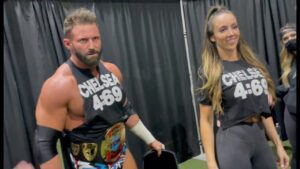
    Just days after a mass release of WWE talent, I caught myself scrolling through old independent wrestling matches on YouTube. It started with GCW Presents Joey Janela’s Spring Break X. Then about a hour later I stumbled across some Matt Cardona GCW videos. What stood out most was not just Cardona’s transformation from WWE to the independents and back to WWE—it was Chelsea Green (no disrespect, Broski).

    It caught me off guard in the best way. Seeing where she was compared to where she is now made me stop and think about how impressive her journey really was— not just returning to WWE, but turning that second chance into a legitimate rise to stardom.

    There is something fitting about the chaos that follows Chelsea Green.

    Not just the character — the exaggerated, loud, “can I speak to your manager?!” energy — but the journey itself. Because if you zoom out, her return to WWE was not a clean redemption arc. It was messy, unpredictable and, at times, unfair. Double down on the messy.

    And that is exactly why it worked.

    The release that could have been the end

    When WWE released Green in 2021, it felt abrupt. She had barely scratched the surface of what she could be on that stage. After a November 2020 debut, she was released just a few months later while sidelined with a broken wrist. The odds seemed stacked against her.

    For many wrestlers, that is where momentum dies.

    Green did not disappear, she recalibrated.

    Across the independent scene and other promotions, she leaned harder into what made her different. The “Hot Mess” persona that made her a fan favorite evolved into something sharper, more intentional and impossible to ignore.

    A return to Impact Wrestling followed. Teaming with Deonna Purrazzo, the duo captured the Impact Knockouts World Tag Team Championship on Aug. 12, 2022, holding the titles for 56 days. More importantly, her attitude and charisma did not change — they grew. That evolution quickly became an attraction for those watching back in WWE.

    She was not trying to prove she could hang in the ring, everyone knows she can wrestle.

    She was proving she could stand out.

    Reinvention over reintroduction

    Standing out is what made WWE pick up the phone.

    By the time she returned in 2023, Green was not the same performer who had been released. She understood something crucial: Being memorable matters just as much as being technically sound.

    Almost immediately, she carved out a role. While others chased dominance, Green embraced disruption. Complaining, scheming and overreacting, she became a character audiences could recognize instantly. One that you can’t ignore. That kind of clarity is rare, and valuable.

    Turning comedy into championships

    For years, the knock on Green was simple: She was entertaining, but not someone you built a division around.

    Then she started stacking accomplishments.

    Her first major statement came in the tag division, capturing the WWE Women’s Tag Team Championships alongside Sonya Deville and later Piper Niven. She quickly became a fan favorite.

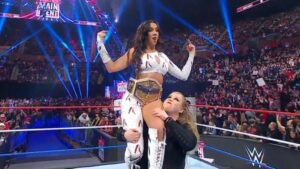
    The real turning point came with the introduction of the Women’s United States Championship. Green became the inaugural titleholder and later the first two-time champion.

    The narrative shifted. When you’re that talented, it’s really hard to ignore. 

    She did not abandon the comedy.

    She proved it could carry gold.

    The power of commitment

    What separates Green is not just the character — it is the commitment.

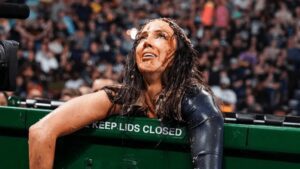
    Every entrance, every segment and every exaggerated reaction feels deliberate. There is no half-measure. From podcasts and interviews (can I get one?), to dumpsters, red carpets and the WWE ring, every appearance feels intentional. There is 100% effort no matter what the task at hand is.

    She has a knack for turning the smallest moments into something memorable.

    In an era where many blur the line between performer and person, Green leans fully into performance — and that is what makes it work.

    It would not be surprising if Hollywood comes calling.

    Why this run matters

    Chelsea Green’s rise back into WWE relevance is not about a single title.

    It is about proof. Proof that personality still matters. Proof that character work still creates stars. Proof that charisma can be louder than redemption.

    She did not return as a question mark, or a feel good story.

    She came back as an answer — a statement in itself.

    Final thoughts

    Chelsea Green was never supposed to be the safe bet.

    But in a landscape where everyone is fighting to stand out, that unpredictability became her greatest strength.

    This was not just comeback.

    It is a reminder that sometimes the loudest, and messiest path is the one that actually works.

    This week was a bad one for many of the talent let go, but this not the end of the road.

  • Richard Holliday: The Most Marketable Man in Wrestling

    Richard Holliday: The Most Marketable Man in Wrestling

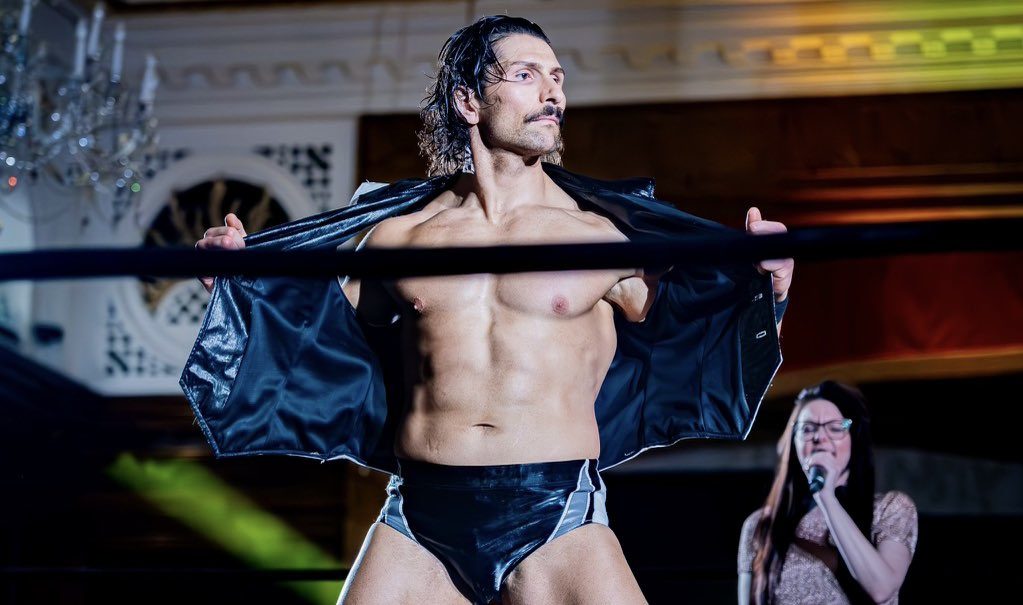
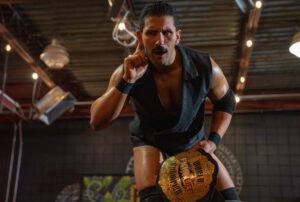
    NXT wants him. TNA wants him. David Goggins wishes he had his work ethic, and Ricochet wants his hair. If you haven’t figured out who I’m talking about, it’s none other than independent wrestling star Richard Holliday.

    Holliday has steadily rebuilt momentum on the independent circuit, carving out a reputation for resilience as much as in-ring ability, and his social media presence is nothing to ignore.

    (Image by SmoothLenz Photography)

    Holliday first gained widespread recognition through his work in Major League Wrestling, where he became a cornerstone of the promotion’s roster. As a founding member of The Dynasty alongside MJF, Holliday developed a persona centered on arrogance and calculated precision. That character work, paired with a fundamentally sound wrestling style, helped him stand out in a crowded independent scene.

    Speaking with Holliday, he doesn’t seem to romanticize it much. “The Dynasty was cool for what it was, but really didn’t last that long,” he said. Max would go on to leave MLW for the bright lights and television. Holliday’s reaction is a blunt one that mirrors the unfinished nature of his story with MJF—one that still lingers with fans. Some fans look at it as if Max left behind friends and partners for the big time.

    (Image by SmoothLenz Photography)

    Since their split, the two have taken very different paths. While MJF became a centerpiece on a national stage, Holliday doubled down on building his own name and brand. When asked if he reflects on how things have played out, Holliday made it clear where his focus lies: “No… I’m far too focused on my career as the current top independent wrestler in the world today.” The difference in mindset is vast. One is traveling the world, proving his worth against top talent every single week—often multiple nights a week—and the other seems to wrestle for a fat paycheck.

    Holliday’s lack of reflection on how things turned out hasn’t stopped fan speculation. The idea of Holliday and MJF eventually meeting in a high-profile singles match refuses to die, and Holliday isn’t shutting the door on it either. “In today’s world, it seems like any match can happen. If a promoter wants to step up and book it, then so be it. Tony Khan can book it. An independent can book it. Or fans can continue to fantasy book it. Or it can just never happen—I am fine with any of that.”

    Holliday seems to know he’s currently the best in the business right now, and whoever comes knocking, it doesn’t matter—no one is exempt.

    It’s not a callout—but it’s not a denial either. And in wrestling, that gray area is where momentum builds.

    For all the intrigue surrounding a potential clash with an old friend, Holliday’s journey hasn’t been defined solely by unfinished business in the ring. Before any hypothetical, career-defining payday or long-awaited showdown could materialize, real life forced him into a far more serious fight.

    In 2022, Holliday was diagnosed with Hodgkin lymphoma. He stepped away from competition to undergo treatment, documenting parts of his journey publicly. His openness resonated beyond wrestling, drawing support from fans and peers across multiple promotions. His determination to win was, and still is, inspiring.

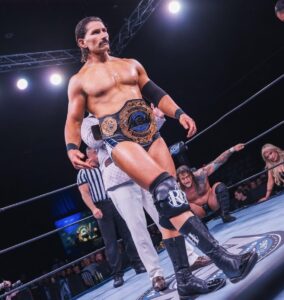
    Richard Holliday’s signature move (SmoothLenz Photography)

    Holliday returned to the ring in 2023, marking a significant personal and professional milestone. Rather than easing back into competition, he quickly reestablished himself as a featured performer on the independent circuit. Promotions across the United States have since utilized Holliday in prominent roles, often highlighting both his technical skill and the real-life perseverance that now defines his story.

    Fast forward to today: Holliday’s name is at the top of the independent circuit mountain, even earning recognition on Cody Rhodes’ podcast What Do You Wanna Talk About? When Matt Cardona was asked who the top names on the indies were, he immediately named Ben Bishop and Richard Holliday.

    Holliday saw the bigger picture right away. “My initial reaction was knowing I’m going to get great content out of this,” he said. “I already knew I was the top guy, but it’s always nice to get put over by your peers, especially on that platform. And my rate factually increases every month… gotta keep up with inflation!” When studying Holliday, there are several things that make it clear why he’s the topic of discussion among the greats. It’s his charisma.

    Since I was a child, the trait that has always stood out to me the most wasn’t a wrestler’s build, age, how many flips they can do, or entrance music—it was charisma. If you don’t have it, you might as well get a desk job.

    Richard Holliday has that trait nearly maxed out.

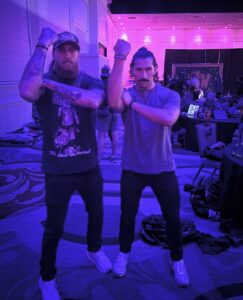
    NFL Tight End George Kittle and Richard Holliday striking a pose

    His social media presence, natural charisma, and in-ring identity allow him to stand out on the independents. In a field where many wrestlers try to go viral by nearly breaking their necks, Holliday works smarter, not harder. With his deliberate pacing, confident demeanor, and attention to detail, it allows him to control the tempo of a match and connect with audiences through subtle storytelling rather than constant high-risk offense. His “signature move” may look like your typical low blow, but he’s turned it into a social media trend. Across the globe, fans and fellow wrestlers are showing their own version of the pose—something that doesn’t happen without real connection.

    From helping build The Dynasty to carving out his own lane on the independent scene, Richard Holliday has turned every chapter into momentum. With his resilience battle-tested, his confidence, determination, and heart prove he’s still very much a major force in wrestling—and at the top of the game.

    Now, with recognition from some of the biggest names in the industry and a reputation that continues to grow, Holliday stands in a rare position—already established, yet still climbing.

    Whether he’s bound for sports entertainment, made to be elite, or delivering nonstop action, at the end of the day, Richard Holliday will always be “The Most Marketable Man in Wrestling.”

  • The “Next Big Thing”: Analyzing WWE’s Main Event Landscape for Late 2026

    The “Next Big Thing”: Analyzing WWE’s Main Event Landscape for Late 2026

    Under Triple H, the move from NXT to the main roster is a calculated strategy to build “TV-ready” global brands for the Netflix era. As Shawn Michaels noted, the goal is to create stars capable of headlining from day one. This ensures that athletes like Oba Femi or Je’Von Evans arrive as established marquee attractions for a pre-conditioned global audience.

    The End of the Tribal Chief Era: Oba Femi

    One name stands above all others when discussing pure physical dominance. Oba Femi is not just a powerhouse; he is a tactical anomaly in the ring. His transition from NXT to the main roster in early 2026—following a historic victory over Brock Lesnar—proved that he can carry the weight of a brand. His “IT-factor” stems from a combination of elite Nigerian collegiate shot-put athletics and a calm, menacing charisma that feels authentic.

    Predicting the success of a newcomer in the main event scene can sometimes feel as unpredictable as hitting a winning combination in Bangla slots, but with Femi, the risk seems minimal. To understand why he is the betting favorite for a potential world title run after his King of the Ring campaign, look at these specific performance markers:

    1. Unmatched Presence: He possesses the rare ability to command a room without saying a word, filling the vacuum left by the legends of the past decade.
    2. Technical Evolution: Despite his massive frame, his timing and safety in the ring are remarkably advanced, making him a reliable main-event worker.
    3. Global Marketability: His background and unique presentation make him a perfect ambassador for WWE’s expanding international footprint.

    Tiffy Time is Forever: The Women’s Evolution 2.0

    By late 2026, the women’s division has evolved beyond the “Four Horsewomen” era. The focus has shifted to stars who blend world-class athleticism with cinematic character work. Tiffany Stratton has transitioned from a promising prospect to a pillar of the industry. Her “Center of the Universe” persona has become the definitive heel archetype for the Gen-Z audience.

    The landscape is also shaped by international dominance:

    • Giulia and Stephanie Vaquer: Their arrival brought a “hard-hitting” style that forced the entire roster to adapt or be left behind.
    • Sol Ruca: After returning from injury, her innovative offense has redefined what fans expect from high-flyers in the women’s division.

    The Charisma of the Netflix Era

    As WWE moves fully into its partnership with major streaming platforms, the requirements for a top star are changing. High-definition cameras and global audiences demand personalities that feel larger than life. The modern fan expects a seamless experience on their mobile devices, whether they are watching a main event or checking odds on MelBet iOS between matches. This digital-first environment favors stars like Trick Williams, who understands how to go viral through social media clips and cinematic entrance presentations.

    The Pillars of 2026: Key Candidates

    While many athletes show promise, only a few possess the resilience to stay at the top. The following athletes are currently the front-runners for the “Next Big Thing” status:

    • Bron Breakker: Currently on the road to recovery after a heroic performance leading into WrestleMania 42, Bron remains the bridge between the Steiner family intensity and modern explosiveness.
    • Trick Williams: He represents the “vibe” of the current generation, possessing a connection with the live audience that is almost impossible to manufacture.
    • Je’Von Evans: At 22 years old, Evans is already a mainstay on Raw, offering a high-flying style that brings a different dynamic to the heavyweight-heavy main event scene.
    • Tony D’Angelo: Having just secured the NXT Championship at Stand & Deliver in St. Louis (April 2026), “The Don” has proven that character-driven personas are vital for the streaming era.

    The NIL Gamble: Risk vs. Reward

    The recruitment process has shifted toward NIL (Next In Line) athletes, bringing in top-tier talent from various sports backgrounds. This has created a roster that is faster and more disciplined, but it also raises a vital question: is the “soul” of the business at risk? While these athletes are elite, the veteran presence of performers who “grew up in the business” remains essential to prevent the product from feeling too manufactured.

    By the end of 2026, the distinction between a “developmental wrestler” and a “main roster star” will be almost non-existent. We are moving toward a unified ecosystem where meritocracy ensures the main event landscape remains fresh and ready for the future.

  • WWE vs AEW: Ultimate Forbidden Door Dream Matches

    WWE vs AEW: Ultimate Forbidden Door Dream Matches

    It’s almost that time of the year. The “Forbidden Door” continues to drive conversation across professional wrestling. While collaboration between promotions has increased, many of the most compelling matchups remain hypothetical. The chances of a WWE x AEW collaboration are slim to none. That gap leaves room for fans to imagine what a truly open landscape could deliver.

    Here is a look at 10 modern dream matches, with each offering a unique reason to believe it could define a cross-promotional super show.

    Seth Rollins vs. Will Ospreay

    Seth Rollins vs. Will Ospreay would likely steal the show on any card. Both are known for constantly evolving their in-ring style, pushing limits in ways few others attempt. It would be fast, unpredictable and filled with moments designed to go viral. Their online beef years ago showed true animosity, and each would love to prove that they are the best in the world.

    Gunther vs. Kazuchika Okada

    Gunther vs. Kazuchika Okada is built for fans who appreciate precision and storytelling. Gunther’s punishing offense would clash with Okada’s calm control and timing. This is the type of match where every strike and counter actually matters. This is the definition of a wrestling match should feel like.

    Rhea Ripley vs. Jamie Hayter

    Rhea Ripley vs. Jamie Hayter would be defined by its physicality. A brutal bar fight that just happens to take place in a squared circle. Both competitors bring a level of intensity that feels different from most of their peers. It would likely be a hard-hitting, no-nonsense fight from start to finish.

    Chad Gable vs. Zack Sabre Jr.

    Chad Gable vs. Zack Sabre Jr is a technical wrestling showcase. ZSJ is not a AEW talent, but we are letting it slide. This is too awesome to ignore. Gable’s Olympic background meets Sabre’s unpredictable submission game, creating endless possibilities. This is the kind of match that rewards fans who pay attention to the smallest details. Put Bryan Danielson on commentary and this would be a wrestling technicians dream.

    Bianca Belair vs. Mercedes Moné

    Bianca Belair vs. Mercedes Moné has the feel of a true main event. Because it already did happen, well, kind of. Bianca vs. Sasha main evented WrestleMania 37. This time it would be even better. Mercedes’ skill set seems to be even better and more evolved since leaving WWE. Both bring elite athleticism and the ability to perform under the brightest lights. It is the type of matchup that could headline a stadium and feel right at home.

    CM Punk vs. ‘Hangman’ Adam Page 

    Yup, you read that correctly. CM Punk vs. Hangman Adam Page carries real-life tension that adds depth. This match with the stakes at hand now would sell out any arena. Their previous encounter only scratched the surface of what the story could be. A rematch would feel more personal, and blur the lines of kayfabe. Fans would genuinely ask themselves “is this real or not?”

    Swerve Strickland vs. Je’Von Evans

    Swerve Strickland vs. Je’Von Evans is a blend of present star power and future potential. Swerve’s confidence and control contrast with Evans’ speed and explosiveness. Swerve acknowledgjng Je’Vons greatness this early on feels like it adds to the mystique. Seeing photos of them together at events feels like seeing Tupac and Biggie without the beef. Swerve adding power and strength to his resume has only made this match even more desirable. This feels like the kind of match that could elevate Evans instantly into the main event scene.

    Kris Statlander vs. Bayley

    Kris Statlander vs. Bayley offers a strong stylistic contrast. Statlander’s strength and physicality would be tested against Bayley’s ring IQ, experience and adaptability. Out of all the matches listed, I think this one has the best chance of happening.It is a matchup that fans see on the card and go “ oh, I have to see this!”

    Becky Lynch vs. Timeless Toni Storm

    Becky Lynch vs. Timeless Toni Storm is as much about character as it is about wrestling. Lynch’s presence and delivery would play well off Storm’s evolving persona. Lynch would be immensely frustrated with the mental gymnastics that Toni would put her through. Characters aside, these two are arguably the best female wrestlers in the world. This is a match that could stand out both inside and outside the ring.

    Kenny Omega vs. Roman Reigns

    Kenny Omega vs. Roman Reigns feels like a collision of two wrestling ideologies, not just two stars. Omega thrives on pace and innovation, and risk, while Reigns slows everything down and makes every moment feel massive. This is like Godzilla vs. King Kong. Jordan vs. LeBron. Stone Cold vs. The Rock. The contrast alone makes this the kind of match fans would analyze for years.

    BONUS MATCH

    Okay, I lied. I couldn’t keep it down to just 10 matches. This is a match that would bring out the worst in tribalism, unfortunately.

    The USO’s vs. The Young Bucks

    The Uso’s vs. The Young Bucks is the tag team dream match fans have debated for years. Blood vs. blood. It is WWE’s most decorated modern team against one of the most influential duos in independent and AEW history. Without The Young Bucks, there is probably no Forbidden Door. The clash of styles, pacing and legacy would make this feel like a true tag team main event. Sure you’ll hear some one complain about the amount of super kicks given, but the amount of money and attention this match would get out weighs all of the petty complaints.

    Final Thoughts


    A truly open Forbidden Door still faces real world complications. Contracts, egos, creative control and brand identity are not small hurdles, and every promotion has something to protect. That reality is why these matches still live more in discussion than in execution.

    From a fan perspective, though, that is part of the appeal. The internet chatter, the fantasy booking and the constant “what if” keep the concept alive in a way that no single event fully could. And if the industry continues to trend toward collaboration, even in small steps, it only takes one breakthrough moment to turn one of these dream matches into something real.

  • Royal Rumble Returns That Shifted Fan Expectations Overnight

    Royal Rumble Returns That Shifted Fan Expectations Overnight

    Royal Rumble returns used to be an easy way to please the crowd. A familiar theme comes on, the audience cheers, and then, the moment is over. But that formula has changed completely in the last 20 years. Today, returns are supposed to give you shock, emotion, and a long story all at once. In fact, if you look at what fans say and do after the event, Royal Rumble surprises are often the most talked-about parts of the whole WWE calendar. So, how did we get to this point? And which returns really changed people’s expectations overnight? Tune in to find out.

    Why Royal Rumble Returns Are Important

    To really understand why people have such high hopes for Royal Rumble returns, it helps to look at how expectations form when experiences become consistent and meaningful. Fans, like engaged users in any field, develop a sense of what quality looks like over time — and once that benchmark is set, anything below it feels like a letdown.

    WWE has “trained” its fans over time in exactly this way. People started to expect the same level of quality every year after they witnessed major Royal Rumble returns. The clearer and more powerful those moments became, the higher the expectations grew. Transparency plays a role here too: when fans understand the structure of an event — who might return, under what conditions, with what stakes — trust builds. Uncertainty without payoff frustrates; uncertainty with a meaningful resolution creates unforgettable moments.

    The Returns That Really Made a Difference

    A lot of wrestlers have come back to the Royal Rumble. But only a few have really changed what fans expect from the event. These moments didn’t just make a noise; they changed what a “great return” should look like.

    John Cena in 2008

    First and foremost, Cena’s comeback in 2008 is still regarded as the best. He had a torn pectoral muscle at the time and was expected to be out for 6 to 8 months. Instead, he was back in less than 4 months. What was even more impressive was that WWE was able to keep this a secret. Before social media leaks became common, this level of surprise was very rare.

    What happened? One of the loudest reactions from a crowd in WWE history. Reports from the event say that the crowd at Madison Square Garden went wild as soon as he walked in. This made it one of the most exciting moments in Rumble history.

    As a result, this moment changed what people thought would happen. Fans no longer expected “possible” returns; they wanted the impossible.

    Edge in 2020

    Edge’s return, on the other hand, showed that emotion can be just as strong as surprise. He took almost nine years off from wrestling after a neck injury ended his career in 2011. Before, doctors had said that there was no chance of a comeback.

    So, when he entered the 2020 Royal Rumble, the crowd didn’t just make a lot of noise; they were moved. Within minutes, millions of people had watched the clips of his return on social media.

    Cody Rhodes in 2023

    His reappearance wasn’t a secret like Cena’s or Edge’s. A lot of fans thought he would show up, in fact. But the way it was done made all the difference. He came in at number 30 and won the match. This gave him a spot in the main event at WrestleMania right away.

    Statistically, only a small number of entrants — especially returning stars — win the Rumble on the same night. Because of this, something new came to light: predictability isn’t a problem if the payoff is big.

    The Undertaker in 2003

    The Undertaker made a comeback in 2003 and brought up the idea of reinvention. Instead of just coming back, he came back with a new direction for his character. This showed that returns could change a superstar, not just bring them back to the sport.

    Back then, it wasn’t as common for characters to change during the returns. But this moment helped set a new standard for creativity.

    Chris Jericho in 2013

    Finally, Jericho’s return in 2013 placed a strong emphasis on timing and pacing. Rather than being placed in the last spot, he came in early, without much advertising. Even so, the reaction was still huge. This showed that a return doesn’t always need the “perfect” spot. Execution is more important than position.

    How Fan Expectations Have Changed

    Expectations have grown a lot over time. Before 2008, a surprise return was just that — a nice, surprising bonus. But today, it’s a must.

    Also, people today simply know more than they used to. There are fewer surprises that stay hidden because of social media, insider reports, and fan speculations. WWE is still expected to give fans at least one major shock every year, though.

    Engagement metrics further support this. Royal Rumble return clips often get the most views on WWE’s official channels within 24 hours of being posted. This shows how important these moments have become to the overall event.

    What Transparency in Promotions Has to Do With Fan Trust

    One of the reasons Royal Rumble moments land so hard is structural: fans know the rules. They understand the format, the stakes, and what a win means. That clarity is what gives surprise its power — you can only be genuinely shocked when you understand what was supposed to happen.

    The same principle applies in other entertainment and bonus-driven spaces. In the online casino world, for example, no-deposit offers have evolved significantly. Platforms no longer advertise vague headline numbers. Instead, the focus has shifted to explaining verification requirements upfront — identity checks, withdrawal limits, eligibility criteria — so users understand exactly what they’re engaging with before they commit.

    Resources like CasinosAnalyzer have made this kind of transparency more accessible, breaking down the real conditions behind bonus offers so that first-time users can make informed decisions rather than discover limitations after signing up.

    The parallel to WWE is closer than it sounds. When audiences — whether wrestling fans or first-time bonus users — understand the structure they’re operating in, they engage more fully. The surprise still hits. But it hits within a framework they trust.

    The Modern Standard WWE Must Meet

    WWE is always under pressure to do better than it did in the past. Stars like Naomi and Alexa Bliss returning to the event show how the company likes to mix old stories with new ones. But fans now look at returns differently. It’s not just about how people react in the moment. Instead, the focus is mostly on the long-term effects.

    •       Does the return lead to a match at WrestleMania?
    •       Does it tell a story?
    •       Does it seem meaningful?

     If the answer is yes, then the return was successful.

    Conclusion

    In the end, Royal Rumble returns have become times when people set and exceed expectations. Every big comeback raises the stakes, which means WWE has to come up with new ideas every year. After all, consistent and meaningful comebacks build trust with fans. They show that surprises still matter — but, more importantly, that those surprises lead somewhere.

  • Berwyn Eagles Club: What It All Meant in the End

    Berwyn Eagles Club: What It All Meant in the End

    This is a piece paying tribute to the place of the Berwyn Eagles Club venue in pro wrestling and what it meant to so many. Since the Club is set to lose a main source of income, here is a GoFundMe campaign to help venue owner Chuck Marose Sr in the aftermath.


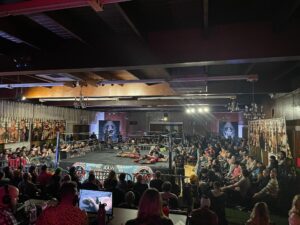
    Across the street from a Mexican restaurant and an ice cream parlor, next door to a car wash, sits a simple place. Nothing crazy about it that screams for more attention than most. A small one with a pronounced sign outside. Much of it is hugged by verdant greenery en route to a dark wooden door; the rectangular pavement in front of it is cracked. Once glance at the blue sign, “Berwyn Eagles” with the titular bird breaching containment atop it. Yep, you’re there at Chicago’s local independent wrestling haven, Berwyn Eagles Club.


    Immediately, the clammy stench of history envelopes you. The arena is compact; the Club’s breadth is intimate—the type of place where people are packed like sardines, within intimate proximity to each other. Hardwood flooring and walls house chandeliers, embodying an atmosphere of Reagan-era structure, a time capsule of the 1980s. As you walk through the halls, 8×10 posters invite you further, making it clear that you’re going to be in the midst of an art unrestrained by the global and corporately controlled capitalism outside. These posters continue into the side and main bar. The world is on fire, but inside, there’s the comfort of great vibes and storytelling in the guise of sport. 

    An AAW show in Berwyn Eagle Club's interior
    Credit: AAW Wrestling

    This main bar, that’s the entrance where fiction struts through the reality that cheers and jeers it. It has two doors, but only one is used for the performer’s entrances. Fans can be seen dipping in and out of the bar or visiting their ATM, hopefully having enough in their account to withdraw.


    Wrestlers hang out backstage, sharing drinks and laughs at the bar. Every so often, if your eye strays enough from the bombastic theater unfurling before you, it might catch sight of wrestlers high and low on the card watching from the entrance and backstage.


     The smell of alcohol and paraphernalia permeates the air. A scent of perspiration soon wafts its foul air. One does not go to independent wrestling shows to be in the presence of aesthetics and sweet aromas. No, this was a place where you forget your troubles and get in the pit of sweat and rage and the masquerade of sport. Where heartache, comedy, hopes, and dreams come to a modest square.


    The Berwyn Eagles Club has hosted this wrestling for over 20 years. In the American Midwest, it was the place to be. A place where, if wrestlers were positioned to be a big player in the independent wrestling scene, they went here. Seth Rollins, Kevin Owens, Bryan Danielson, Beth Phoenix, Sami Zayn, Claudio Castagnoli, Becky Lynch, Nattie Neidhart, Athena, and Asuka are just a few.

    https://x.com/OGHank312/status/2042683209004048500?s=20

    For the nostalgic CM Punk fans, this is where he made his first wrestling appearance since winning the WWE Championship from John Cena at Money in the Bank in 2011. Yes, where he praised the courage of Gregory Iron, a wrestler living with Cerebral Palsy. It was there, in Berwyn, at AAW’s “Scars and Stripes.”


    During Cody Rhodes, Drew McIntyre, and Matt Cardona’s indie reinvention runs, they too circled through its wooden palace. From residential lucha promotions to Wrestle League and Squared Circle Superstars, attendees could expect all the charm of indie wrestling. Yet, chief among these were AAW and the all-female SHIMMER wrestling promotion.


    That’s the impact of the Berwyn Eagles Club. It doesn’t have a history solely in independent wrestling, but in the overall industry as a whole. Whether it was the loyal talents or the ones who compete under blinding lights, wrestling came through here. Just as Reseda was to PWG, Korakuen Hall is to Japan, Arena Mexico to Mexico, and Madison Square Garden is to WWE, Berwyn is to Chicago. 


    Unfortunately, its place in wrestling history is set to dissipate. On March 28, an incident took place in which a fan allegedly stabbed wrestler Krule at a Ruthless Pro Wrestling event in Berwyn, Illinois.


    Videos of the event showed no signs of weaponry for Krule to be stabbed with, only a brawl at a nearby merchandise table. According to an incident report researched by John Pollock of POST Wrestling, the local Berwyn Police Department stated that no stabbings took place at the venue.


    I’m not going to get into the specifics of who said what or what I believe happened. There’s plenty of that to go around. What I want to do is to capture its place in wrestling the best way I can: conveying vibes.


    Why? 


    Because, as the world of wrestling changes drastically with every passing month, it’s important to remember. And I want people to do just that—remember. No one who holds wrestling fondly in their hearts should forget Reseda. They should also keep Berwyn in their hearts for the same reason. What may seem to some to be a small, rinky-dink place was, to others, a livelihood and a way to step into superstardom. It was home, and it was a dream. 


    I’m only a wrestling fan, though. A microcosm of a wider field, a raindrop in a river. To me, a Missouri boy, my state has its own relevance to pro wrestling with Kansas City and St. Louis. Yet in Chicago, Berwyn will remain one of the most essential veins running to the heart of Midwest pro wrestling. 


    As AAW’s event, Crush & Destroy, approaches its April 24 date, you can expect to see people talking about what this venue means to them. This is where indie wrestling in the Midwest came to its local hotspot. Fans will talk about where they were at distinct moments within their quickly moving lives. Maybe which wrestler they saw at certain points in their career. Wrestlers will wax nostalgic about their glory days, exciting matches they had, and appreciate the moments that made them. 


    You may also come across posts from wrestlers on social media whose lives are intrinsically tied to the place. People like Shane Hollister, Nicole Matthews, Trent Zuberi, and Shazza McKenzie may be among those names. Talents from AAW and SHIMMER, alongside talents that have passed through its doors and gone on to other places.

    https://x.com/AAWPro/status/2042377633250377917?s=20

    If you’re in the Chicago area, consider giving it a visit; purchase a ticket and show up on Friday evening, and witness a moment in wrestling history. If you can’t be there, you can watch from Highspots.TV, YouTube, or TrillerTV.


    Crush & Destroy’s card will feature talents like Rich Swann, Robert Anthony, Joe Alonso, Trevor Lee, Maggie Lee, Heather Reckless, and many more to keep your eye on.


    Pro wrestling is at a stage where it constantly changes. Everything’s in flux. For every evolution, there’s a dissolution. In their wake, they leave memories. These last moments of grappling action? Those memories will be filled with blood, sweat, and undoubtedly, tears.


    So here’s to the final memories of wrestling fans’ third place, a place to gather away from home. Here’s to the finale of the Berwyn Eagles Club in pro wrestling.


  • Lucha Libre: A Culture Beyond A Sport

    Lucha Libre: A Culture Beyond A Sport

    Since 1933, Mexico has had the opportunity to have the privilege of being the home country of what is current day’s oldest wrestling company in the world: El Consejo Mundial de Lucha Libre (CMLL), guided by the vision of the man that is known as “El Padre de la Lucha Libre” (The Father of Lucha Libre), Salvador Lutteroth, who’s inspiration and memories are still remembered every year in La Catedral de la Lucha Libre in Arena Mexico with the known event Homenaje a Dos Leyendas.

    Then, in 1992, during one of the biggest booms that the sport has ever seen in the country, former CMLL (Then EMLL) writer and booker, Antonio Peña, founded what would be known as Lucha Libre AAA WorldWide with his own vision, giving an alternative promotion for Mexico and bringing some talents with him on a road to create a new legacy that would be disliked by many individuals that felt it was a betrayal, but reality was different, it was an opportunity to share a beloved sport to even more people around the country.

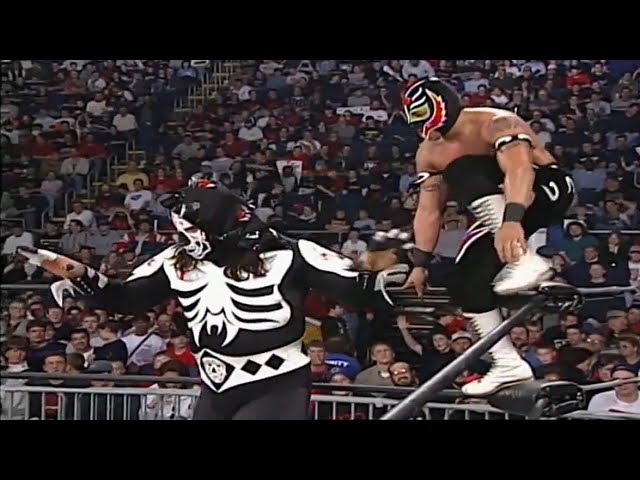
    Both companies would go on on a rivalry that would be both promotions on a gigantic clash. Bringing some of the most iconic luchadores to the show to see who could present the biggest shows and both companies would work evenly, bringing the likes of Mil Mascaras, El Canek, El Hijo del Santo, Eddy (Eddie) Guerrero, Blue Demon and Blue Demon Jr. But also creating icons, new characters to relate to people in the form of La Parka (A.K.A L.A Park), Rey Mysterio Jr, Psicosis, Atlantis, Ultimo Guerrero, El Felino, Negro Casas and many more. Lucha Libre was here to stay, not just be an occasional sport, it was becoming part of Mexico’s culture, a way of living, an escape from reality that would be embraced on several environments.

    The Big Jump to the United States

    Jackie Joe, a luchador from Sonora was the first Mexican to wrestle in the United States in 1933, but it wasn’t until 1972 when Mil Mascaras made the first jump to a major company when he wrestled for WWE (Then WWWF) at a Madison Square Garden. Mil Mascaras would go on and challenge for the WWWF World Championship, Intercontinental Championship and the WWF Tag Team Championship along SD Jones. Then, thanks to the creation of AAA, the idea of being conservative, traditional and more with Lucha Libre started being an old idea with Antonio Peña saw some of the contracted luchadores to make a jump to American soil, regardless if he was agreeing to their decision or not, he was recognized as one of the principal people that brought Lucha Libre to the United States. Some of them worked at the 1997 Royal Rumble with Mil Mascaras himself, Cibernetico, Latin Lover and Pierroth Jr being participants of said match and then working on several promotions, but the most remarkable: Extreme Championship Wrestling (ECW) and World Championship Wrestling (WCW). Delivering us infamous moments such as the Mexican Death Match between Tajiri and Super Crazy, La Parka running around with his chair and being nicknamed “The Chairman”, Rey Mysterio and his legendary battles against Eddie Guerrero and Psicosis. All of this where the first steps for the American fans to explore on a new style of wrestling, a style that would also be more noticeable on WCW’s Cruiserweight Division and in matches that featured Luchadores part of the original Latino World Order (LWO). All the main elements and legacy would allow for several eras of Luchadores to participate in companies such as TNA, WWE and most recently, AEW.

    More Than a Mask; An Identity

    In Wrestling, a gimmick is usually the character that identifies your career for maybe a short period, maybe the rest of your career, but in Lucha Libre, it determines your life forever if you decide to persuade the dream of entering the four corners of survival. The most important figures of the industry that have left this world adopted a life that was tied with the mask, going beyond the sport, becoming icons and one with the name, with El Santo and Blue Demon being buried with their masks on and are character’s that have surpassed the industry itself, becoming an immortal part of not just Mexican Culture, but culture in general, as they were billed as real life superheroes that are still mentioned current day, being featured in movies, novelas, wrestling matches and more media that nobody has been able to surpass.

    Americanization On The Industry

    There’s no secret that Lucha Libre saw a decrease of the interest by fans and society around the 2006 all the way to 2008, key moments like the death of Antonio Peña, the insecurity in Mexico and the rise of popularity of WWE and MMA in the country started taking away the attention of the traditional methods. Lucha Libre started feeling it was rinse and repeat every time, until AAA started leaning towards a style that looked familiar, a style that could only be defined by “sports entertainment”, which made fans turn back to the company, only to realize they tried to be a bootleg version of WWE, even tried to bring bigger international names like AJ Styles, Bobby Roode or James Storm or doing angles too similar to what we could watch on the other side of the river with controversial endings such as the infamous L.A Park vs La Parka disaster when Los Perros Del Mal helped out L.A Park until the decision was reverted back, cause criticism to raise on the lack of creativity and essence that made the Mexican industries stand out, even reaching to a point that AAA was considered “a bootleg version of WWE with a cheap budget”, hurting the perspective of fans towards the company.

    During the second half of 2024 and throughout 2025, it was clear that the popularity of Lucha Libre generated a modern boom, leading several stars to go viral thanks to highly acclaimed fights, Luchas de Apuestas that would represent a giant step in the careers of wrestlers such as Zandokan Jr. and Hechicero (to name a few), until these Mexican talents were incorporated more naturally into the two largest companies in the industry today: WWE and AEW, but not without notable consequences.

    Despite everything, the attention that companies such as CMLL and AAA managed to attract from the general public outside the country has had consequences, including the participation of wrestlers who are not accustomed to the guidelines that are customary in the country, which has had a noticeable impact, especially since WWE purchased Lucha Libre AAA. Initially, the product changed gradually, with improvements such as better production and planning of spots, but also an even more noticeable departure from what was customary in Mexico, where, once again, the scarcity of Luchas de Apuestas caught the attention of fans, as this led to several already advanced storylines disappearing from the programming without a trace, being completely forgotten and trying to give a bigger importance to championships, which some fans would consider abnormal, as titles are mostly just decorations, rather than the highest price for companies.

    Recently, another important detail was mentioned by several fans, where since the end of December 2024, it was noticed that every time a wrestler from AEW visited the Arena Mexico and the CMLL, the stipulations of the matches were changed to fit their customs. This was replicated during the “International Weekend,” where the scarcity of trios matches and 2 out of 3 fall matches was quite displeasing and received criticism, as the product began to lack personality, gradually becoming “AEW Dynamite Hours 3 and 4.” A couple of weeks ago, the CMLL announced that the Captain’s Rules for trios or tag matches would disappear completely, once again raising alarms among Spanish-speaking fans, who compared it to an American style and accused it of trying to be “colonized,” as many were labeling it.

    Last week, during the most recent broadcast of Lucha Libre AAA, we saw how the long-standing rivalry between Abismo Negro Jr. and El Fiscal has been revived. Rumor said that this rivalry would be the main event at TripleMania XXXIII, where the two would battle it out to see who would carry on the name and mask of Abismo Negro. It was a fight that had been eagerly waited for a long time and was one of those that had been forgotten. This has left a glimmer of hope that, perhaps, AAA management is realizing that fans are not entirely happy with moving away from what sets them apart. The tradition of betting hair, names, and masks is something totally sacred, along with the rules of combat that have been followed for so many generations.

    CMLL, on the other hand, does not seem to be backing down from its roots, as criticism continues to mount with each passing week, such as this week’s example with the Caballera vs. Cabellera match between Angel de Oro and Johnny Consejo (Johnny TV in AEW).

    There is a fine line between supporting these alliances that have been reflected in the product and leaning entirely toward one side. It does us no good to have sold-out crowds week after week if things continue to feel empty, directionless, and above all, without heart and soul. Lucha Libre is a culture in Mexico, not just another sport and entertainment like in other countries. It represents our history, our real-life heroes, our escape from society to unite with others who share the same belief that without it, life would be flat and boring. Let’s not forget where we come from. Let’s embrace it and carry it forward because without it, we wouldn’t be where we are today after more than 90 years, bringing people’s eyes from outside your origin won’t pay off losing the people that’s always been there.

  • The 10 Greatest Wrestling Heels of All Time, Ranked

    The 10 Greatest Wrestling Heels of All Time, Ranked

    Professional wrestling thrives on conflict, and few elements are more essential than the heel. While fan favorites generate support, it is the villains who fuel emotion, create tension and elevate the stakes. The most effective heels do more than win matches. They provoke audiences, blur reality and make fans eager to see them lose.

    10. Maxwell Jacob Friedman

    Yeah, you’re reading that correctly. Maxwell Jacob Friedman has mastered the art of modern villainy. Rarely stepping outside his persona, he delivers cutting, personal promos designed to generate real animosity. In a landscape where many heels are cheered, MJF consistently draws genuine disdain by embracing old-school tactics with a contemporary voice. His importance to the history of AEW also is key for him cracking the top 10 at such a young age. When you associate the world “heel” with AEW, you immediately think of MJF.

    9. Bobby Heenan

    Bobby Heenan, known as “The Brain,” mastered the art of drawing heat without ever needing to step fully into the spotlight as a wrestler. As the leader of the Heenan Family, he surrounded himself with top-tier talent while constantly inserting himself into matches through distractions, arguments and well-timed interference.

    His sharp, often sarcastic promos blended humor with arrogance, allowing him to insult fans and elevate his clients at the same time. Even on commentary, Heenan stayed in character, openly supporting villains and mocking fan favorites, which only deepened audience resentment. His awareness of timing and ability to control the tone of a segment made him one of the most effective and influential heels in wrestling history. If the younger generation want to show their bad side, I would immediately recommend studying Bobby’s work.

    8. Triple H

    Triple H developed into one of wrestling’s most dominant antagonists through authority and control. As a central figure in D-Generation X and later Evolution, he combined in-ring skill with backstage influence. His calculated promos and willingness to manipulate outcomes made him a consistent and imposing heel presence.

    Add in that you’re married to the bosses daughter, and your back stage politicking bleeds into real life, it just naturally comes off that you have an ego and are a “bad guy”. If you really want to stretch it out, his booking since taking over creative has been so inconsistent, you’d think he was trying to agitate the fans still.

    7. Edge

    Edge leaned into controversy and opportunism to build his heel legacy. Whether exploiting situations or creating them, he consistently positioned himself as a manipulative force. His rivalries often felt personal, amplifying audience reactions.

    6. “Hollywood” Hogan

    The transformation of Hulk Hogan into Hollywood Hogan reshaped wrestling. By abandoning his heroic image and embracing arrogance, he shocked audiences and led one of the industry’s most influential factions. The shift proved how powerful a well-executed heel turn could be. The night that Hogan joined the NWO changed the wrestling business forever.

    5. Shawn Michaels

    Shawn Michaels developed into a compelling antagonist through ego and betrayal. From his infamous split with Marty Jannetty to later controversies, he embraced a self-centered persona that consistently drew strong reactions from fans. Unfortunately, his real life struggles bleed through onto the screen, and that heightened his cocky persona.

    4. John Bradshaw Layfield

    On a personal level, I absolutely hated this man as a kid. The millisecond his music hit my ears, I was immediately mad. John Bradshaw Layfield crafted a character built on status and superiority. Presenting himself as a financial success, he often spoke down to audiences and opponents. His dominant championship run reinforced his role as a deeply disliked figure. There was no fancy presentation, heavy metal music, or over the top physique, just pure arrogance and ego. It felt too easy for John.

    3. Randy Orton

    Randy Orton’s approach to villainy is calculated and deliberate. Known for precise, often sudden attacks, he developed a reputation as a cold and methodical competitor. His willingness to target anyone, including allies, made his actions feel personal and impactful. 20 years later, and Randy is still relevant with his heel work. Recently he was in the main event of Night 1 of WrestleMania 42, and closed the show by punting in the skull of Cody Rhodes.

    2. Ric Flair

    Ric Flair defined the arrogant champion. His flashy lifestyle, constant boasting and reliance on shortcuts made him a consistent antagonist. Flair’s ability to draw both admiration and resentment ensured his lasting influence as a heel. As a wrestler, he is the best heel ever, but there is one man so evil, that he outshines Ric on an overall scale.

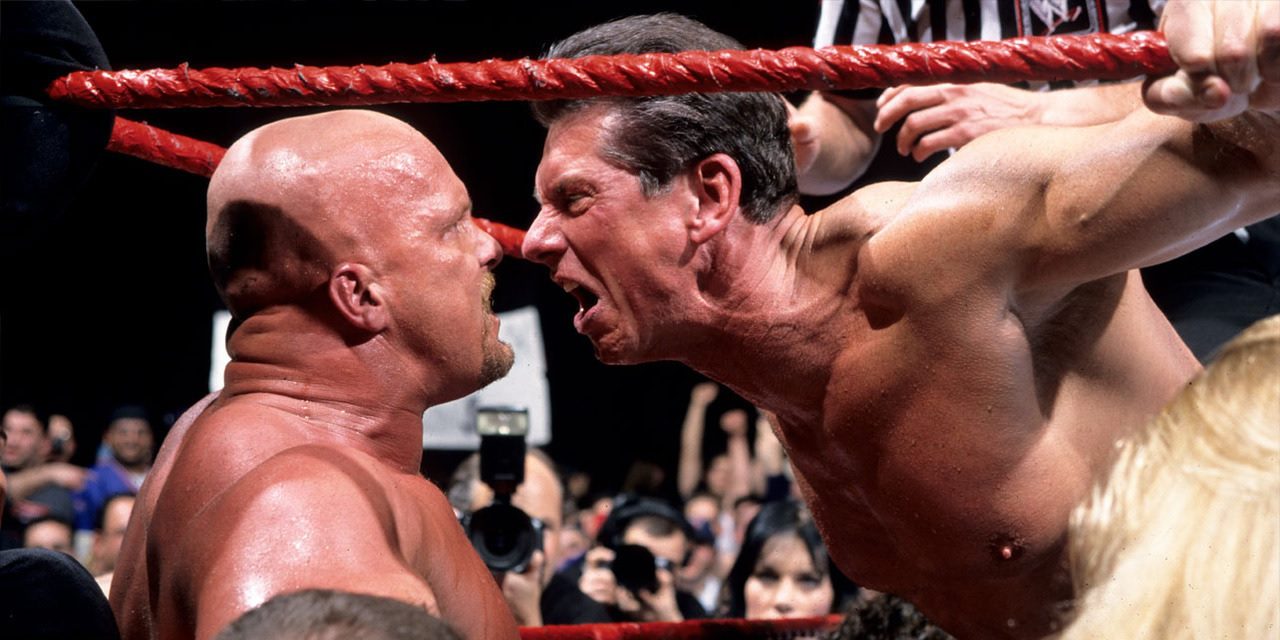
    1. Vince McMahon

    Vince McMahon blurred the line between fiction and reality like few others. As the authority figure fans loved to hate, he embodied power, control and corruption. His rivalries, particularly against rebellious stars, created some of wrestling’s most memorable moments. McMahon’s presence elevated entire storylines, proving that the most effective villains are often those who feel real.

    Many names are responsible for the attitude era boom, and his name is tied to it all. Whether it’s his legendary feud with Stone Cold Steve Austin, or literally trying to put his rival out of business, he was the epitome of a heel— pure evil. Unfortunately, his personal life would full of corruption, and should not be ignored. This is not a celebration of the man, but just a recording of the history of professional wrestling.

    Closing Thoughts

    The role of the heel continues to evolve, but its importance remains constant. From outspoken modern stars to dominant authority figures, the best villains understand how to create emotional investment. Their ability to draw genuine reactions ensures that, no matter the era, the heel remains at the center of professional wrestling storytelling.

  • Why Combat Sports Fans Keep Chasing Certainty in Events Designed to Disrupt It

    Why Combat Sports Fans Keep Chasing Certainty in Events Designed to Disrupt It

    Combat sports involve endless discipline from those who compete at the top level. But what makes the likes of boxing and MMA so enticing to spectators is the element of chaos underpinning even the most high-profile bouts. With every punch thrown and kick launched, there’s the potential for sudden glory or painful defeat.

    Despite the reality of randomness in combat sports, fans tend to try to anchor each face-off with a degree of certainty. So, why is this the case, and does it make sense to predict fight outcomes, or is doing so a fool’s errand?

    Safety in Stats

    Combat sports are closely analyzed and dissected after the fact, so today we’ve got access to vast volumes of information on how each and every athlete performs. This gives us the incentive to make predictions and future fight outcomes based on things like takedown defense percentages and typical strike accuracy.

    It makes sense for bookmakers to be clued in on these metrics, since it’s their job to calculate odds for upcoming combat sport events. And with the dawn of legal sports betting Canada and other countries now have opportunities for punters to place wagers on their favorite fighters, so being data-focused is also worthwhile in this context.

    However, stats aren’t as applicable to combat sports as to other events. In a baseball season, for instance, you get lots of games across which long play sessions can be scrutinized. In MMA, a fight might last an average of 10 minutes, and a fighter might only compete two or three times annually at best. So here, there’s the illusion of safety in the numbers, whereas there’s much less cause for certainty in predictions.

    Obsessing Over Storytelling

    Another crutch combat sports fans have is their love of a good story. It’s something the media machine whips up before important events, and when two fighters have history with one another, or there’s a young upstart taking on a veteran athlete, it’s in our nature to make assumptions about the outcome based on what’s narratively satisfying, not what’s actually possible.

    Even homing in on apparent certainties, such as a competitor being in career-best form, based on footage from training camp sessions shared on social media, is misleading. All the prep in the world might feel like a montage from Rocky that leads us towards assuming there’ll be a Hollywood-style conclusion to a fight, but once the bell rings, it’s not about what would make sense in a movie script.

    Revising History

    Lastly, combat sports fans chase certainty in events that are fueled by potential disruptions because when we look back at past fights, we’re not afraid to rewrite the history books on what actually happened. A lucky punch that wins the day out of nowhere will be reframed as inevitable. A last-minute comeback from a fighter who’s spent the whole match with their back against the ropes will make the earlier shakiness seem strategic, rather than a sign of weakness.

    In short, no sporting event outcome is certain, and combat sports have more chaos involved than most. We want certainty as fans, whether we’re betting on a bout or not, because we like feeling clever, and we love good stories.