


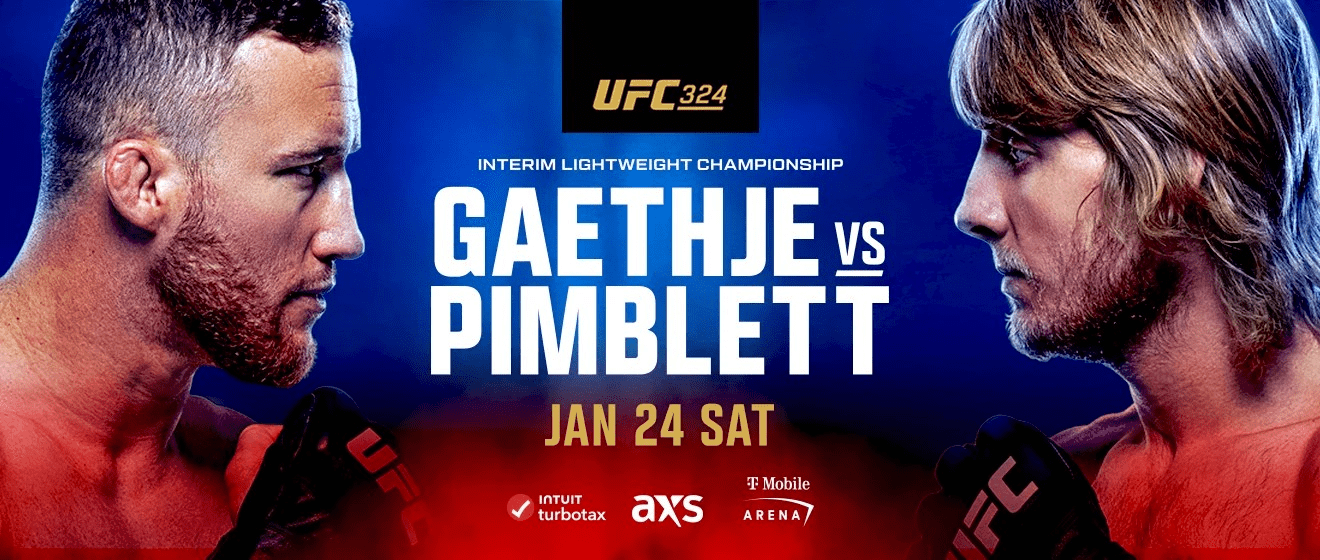
Justin Gaethje versus Paddy Pimblett, set to headline UFC 324 on 25 January 2026 at the T-Mobile Arena in Las Vegas, is a rare kind of mismatch that invites precision rather than poetry. The bout is for the interim UFC Lightweight Championship, a stopgap title created because the reigning champion, Ilia Topuria, is currently unavailable to defend his belt.
Gaethje comes into this fight as one of the most experienced competitors in the division, with a professional record of 26 wins and 5 losses. Across those bouts he has scored 20 knockout victories, and his striking statistics reflect that all-action reputation: he lands an average of 6.59 significant strikes per minute with around 60% accuracy, figures that mark him among the sport’s more aggressive strikers. Pimblett, by contrast, is 23-3 overall, undefeated in seven UFC fights, and enters with a momentum few lightweight contenders possess.
Odds, Early Rundowns, and Incentives
In the lead-up to the fight, sportsbooks have generally opened Pimblett as the favourite—reflecting his unbeaten UFC run and recent high-profile victories—while Gaethje’s odds are longer, suggesting bookmakers see him as a less likely but still credible threat.
For people new to MMA betting, it’s worth remembering that odds are a blend of statistical reality and public perception, not prophecies. Around major UFC cards, many casual followers also compare available offers. This often means consulting resources such as a list of sportsbook bonuses on Oddspedia available in Canada, which commentators frame as a way of weighing incentives rather than chasing unrealistic payouts.
In simple terms, bonuses and promotional perks don’t affect the fight itself, but they can influence how some spectators choose to engage with the market. Always read the conditions attached to such bonuses before assuming they improve your edge.
Gaethje: The Old But Still All-Action Warrior
Gaethje’s presence in the octagon still feels significant precisely because he throws so much at his opponents. His strike output—a heady 6.59 significant strikes landed per minute—is higher than most of his lightweight peers, and his standing as a former interim champion gives his résumé historical texture. He also has a strong takedown defence rate close to 68%, making it difficult for many wrestlers to keep him grounded.
What happens when Gaethje lands matters as much as how often he does. His 20 official knockouts speak to both accuracy and power, but they also underline a stylistic reality: his fights are designed to be felt, not merely watched. He’s the kind of fighter who demands that the narrative of any round be written in impact rather than nuance.
Pimblett: Momentum and Muscular Confidence
Pimblett’s trajectory has been less about refinement and more about ascent. Since arriving in the UFC in 2021, he has steadily climbed the lightweight rankings, entering this fight at No. 5 in divisional standings and with his UFC record unblemished at 7–0. His significant strike rate is lower than Gaethje’s—roughly 5.19 per minute—but his accuracy and versatility, particularly once the fight hits the mat, distinguish him from many peers.
What Pimblett lacks in gaudy output he compensates for with grappling options and submission attempts that outpace many in the division. His style rewards transitions and opportunistic positioning; in the language of MMA metrics, he is a threat wherever the fight goes. Many have written him off or stated that he would be found out in his next fight, yet his varied pedigree continues to defy critics. That dual-threat element will be pivotal against an opponent who has historically favoured stand-up war.
Stylistic Clash: Stand-Up vs. Scramble
In mixed martial arts, the simplest question often carries the most weight: where does the fight take place? Gaethje has clearly lived and prospered on his feet, with striking stats that dwarf average divisional figures and a track record of forcing pace. Pimblett’s comfort in scrambles and submissions introduces a stylistic complication — one that might not eliminate Gaethje’s power but could mitigate its effect.
If Pimblett brings this fight to the mat and keeps it there, he might neutralize Gaethje’s power bombs. If Gaethje keeps the fight upright and punishing, he leans into his strengths. This fundamental tension gives the matchup its narrative, its tension and, quite possibly, its outcome.
Experience vs. Momentum
There is also an age and mileage component. At 37, Gaethje is approaching the later stages of a career defined by durability and carnage. Pimblett, at 30, is more ascendant than settled — less burdened by past wars, though untested against gauntlet-level grapplers and power strikers as Gaethje has faced. These aspects will not show up on the scorecards, but they whisper through every betting line and fight-night headline.
Whatever happens on January 25, this fight will tell us something about the lightweight division’s evolving hierarchy: whether experience and tried instinct still trump youthful confidence and stylistic adaptability. For the casual observer and the numbers-minded alike, that is what makes this bout more than just a statistic, but a story in motion.